Is That Pink Chicken Safe? Check the Internal Temp, Not the Color
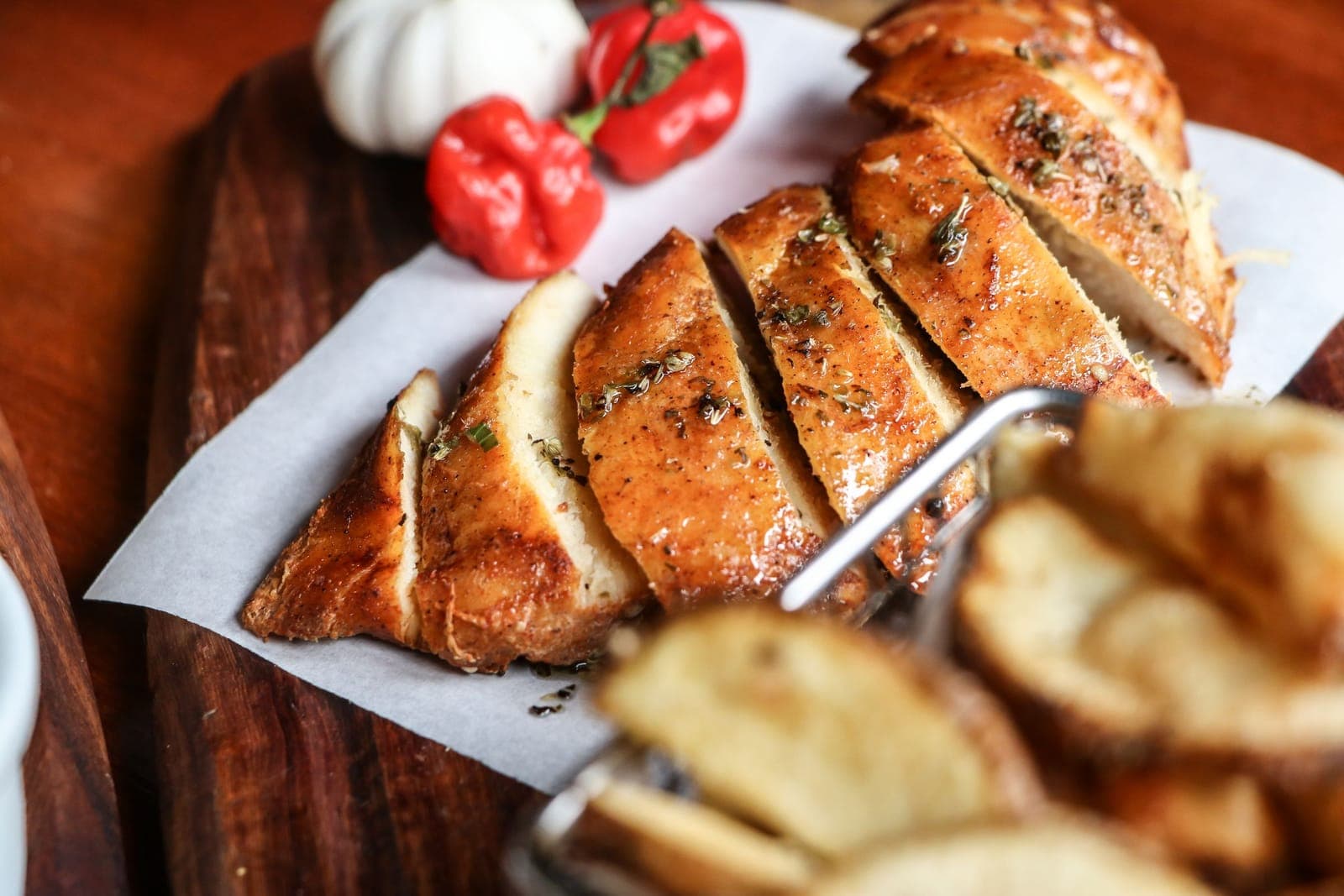
You cut into the thigh and there it is, a blush of pink right where the meat meets the bone. You had already turned off the heat. Put it back on and it goes dry; leave it and you spend dinner wondering. Almost everyone decides this moment by looking. But does that pink actually mean undercooked?
Where the color actually comes from
The cut-and-check habit rests on the idea that color tracks doneness in a straightforward way. It does not. So where is that red coming from in the first place?
The red color of raw meat comes from myoglobin, not blood, and it browns as heat denatures the pigment.1
So a pink tinge near the bone can be leftover pigment rather than undercooked meat, and it often sticks around long after the chicken has passed a safe internal temperature. Color is telling you about myoglobin, not about safety. The reverse mistake is just as common: chicken can look perfectly white and still sit below 74 degrees Celsius at its thickest point.
So what should you trust instead
If color is not a reliable signal, what is left has to be a number rather than a look. So what is the number?
Poultry is safe to eat when cooked to an internal temperature of 74 degrees Celsius. That figure is the USDA FSIS safe minimum internal temperature of 73.9 degrees Celsius, or 165 degrees Fahrenheit, commonly rounded to 74.2
That is the one figure worth memorizing, and a thermometer is the only tool that reads it directly. Everything else, juices running clear, meat pulling from the bone, color at the center, is a rougher proxy that can mislead in either direction. Probe a chicken once and you can feel what the visual checks had been standing in for all along.
The other risk hiding in raw chicken
Temperature settles the doneness question. Raw chicken, though, carries a separate risk that starts before it ever reaches the pan.
Raw meat juices can cross-contaminate ready-to-eat foods, so separate cutting boards and utensils are recommended. The separate-board practice is a recommendation in United States and Codex food hygiene guidance rather than a property of the contamination itself.3
This one has nothing to do with how well you cook the chicken and everything to do with what touched it beforehand, which is why the habit matters even for a bird you plan to cook through. Your board and your hands are their own checklist, separate from the thermometer.
Check chicken safely
Here is how to turn temperature and cross-contamination into a routine instead of a guess made by eye.
- Insert an instant-read thermometer into the thickest part of the chicken, avoiding bone, and confirm it reads 74 degrees Celsius or above.
- Check the temperature in more than one spot for larger cuts or a whole bird, since thickness varies across the piece and one reading is easy to be fooled by.
- Ignore pink coloring near the bone or surface if the thermometer confirms 74 degrees Celsius; trust the number over the look.
- Use a separate cutting board and utensils for raw chicken, kept apart from anything eaten raw or ready to eat.
- Wash your hands, the cutting board, and any utensils that touched raw chicken before they touch other food.
- Never rinse raw chicken in the sink, since it splashes bacteria onto nearby surfaces without meaningfully reducing what's on the chicken itself.
Sources & facts
Facts without an external link are drawn from the R&Dish reviewed corpus (textbook-level food science).
TopicKitchen Safety