Heads, Hearts, and Tails: Where Does a Distiller Cut?
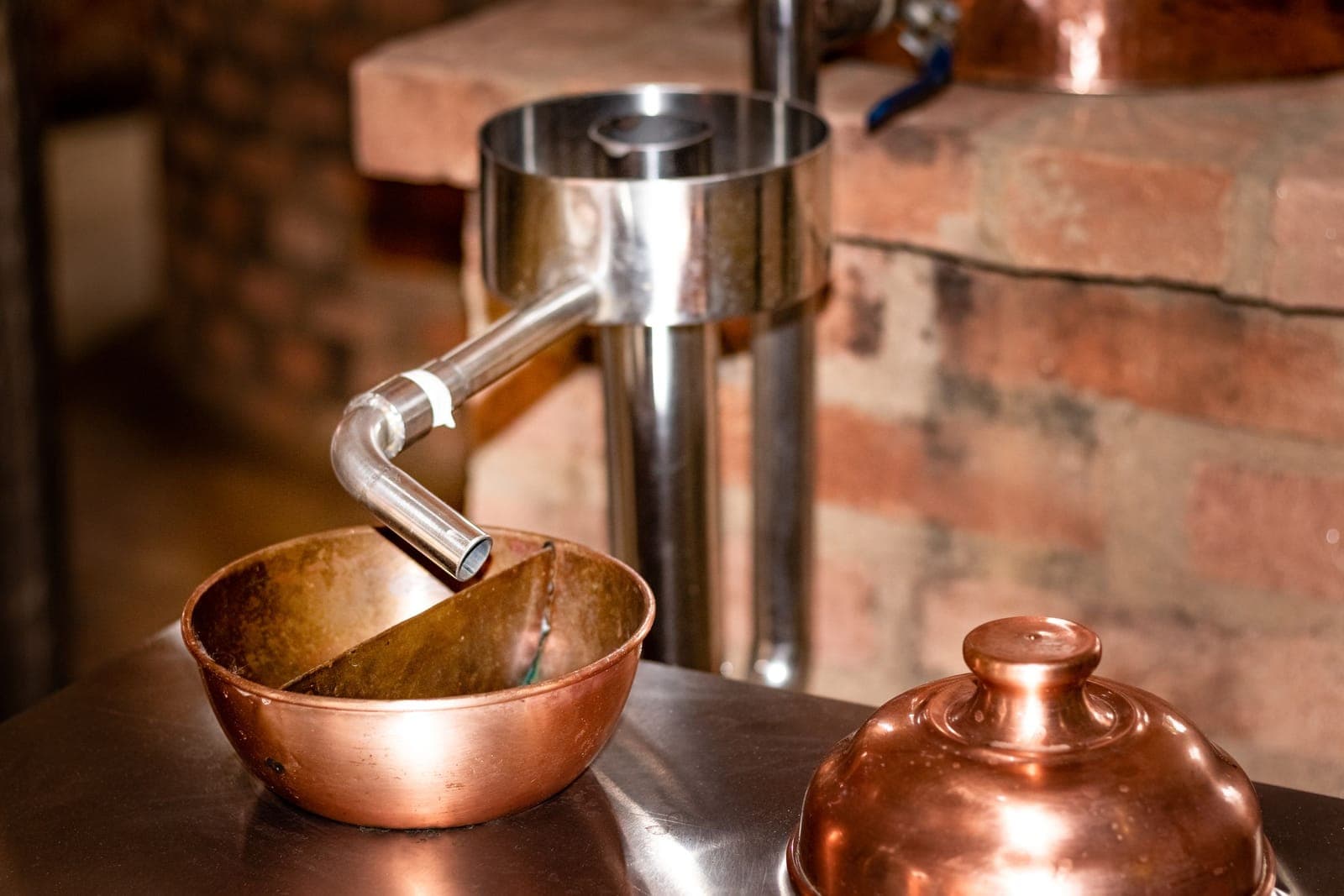
Watch a spirit come off a pot still and it does not arrive all at once but in order, with a distiller standing there the whole way through deciding where to start and where to stop. The run splits into three parts. The heads, the hearts, and the tails are the distillation cuts that separate a clean spirit from a rough one, and the order is not arbitrary, since it follows straight from what is boiling and when.
Why the still separates anything at all
A fermented wash is mostly water with a little alcohol dissolved in it, so how does heat pull the two of them apart?
Distillation concentrates alcohol because ethanol boils at 78 degrees Celsius, below water's 100 degrees.1
Ethanol is not the only thing with a low boiling point. That is the whole reason cuts exist, and the most volatile compounds come over first, ahead of the alcohol you actually want, in the fraction distillers call the heads.
The first vapors off a still, the heads, are rich in volatile methanol and acetaldehyde and are discarded.2
The heads are cut for a concrete reason, not just for flavor. One of the compounds that gathers there is a good deal harsher on the body than the ethanol it rides in front of.
Methanol is more toxic than ethanol, so distillers discard the heads fraction where it concentrates.3
The middle you keep, the end you drop
Once the sharp early vapors have passed the still settles into its best stretch, and this is the part a distiller has been working the whole run to reach.
The hearts, the middle fraction of a distillation run, hold the cleanest ethanol and the most desirable aromatics.4
As the run winds down and the temperature climbs the character shifts again, with the heavier, oilier compounds that stayed behind earlier finally coming over, and a distiller cuts away from the hearts before they take hold.
The tails at the end of a distillation run concentrate heavier fusel alcohols and oily, astringent compounds.5
So a finished spirit comes down to where you start collecting and where you stop. Too greedy at either end and the harshness comes along for the ride, too cautious and the yield drops, so the cuts are the craft.
Reading it in a bottle on your shelf
You do not need a still to notice what cuts do. The evidence is already sitting on the shelf, and a few finished bottles are enough to taste the logic.
- Pour an unaged white spirit and nose it before you sip: the cleaner and less solvent-like it smells, the tighter the hearts cut behind it.
- Compare a cheap and a premium version of the same category side by side, and look for that oily, drying finish that signals a wider tails cut.
- Add a few drops of water to a high-proof spirit and taste again. If nothing shows up at first that is fine, since dilution takes a moment to open aromatics that a hot pour keeps hidden.
- Read the label for terms like single pot still or double distilled, which describe how the maker managed the run.
- Keep notes on the harsh top-note versus the heavy finish separately: one points to heads, the other to tails. Two bottles compared that way and the next pour tells you where it was cut.
Sources & facts
- 1. Distillation: ethanol boils first ↩
- 2. Heads: the volatile first cut ↩
- 3. Methanol: why the heads are cut ↩
- 4. Hearts: the clean middle cut ↩
- 5. Tails: where the heavy, harsh notes go ↩
Facts without an external link are drawn from the R&Dish reviewed corpus (textbook-level food science).
TopicBar & Spirits