How Does Fermentation Create Umami?
why fermentation creates umami
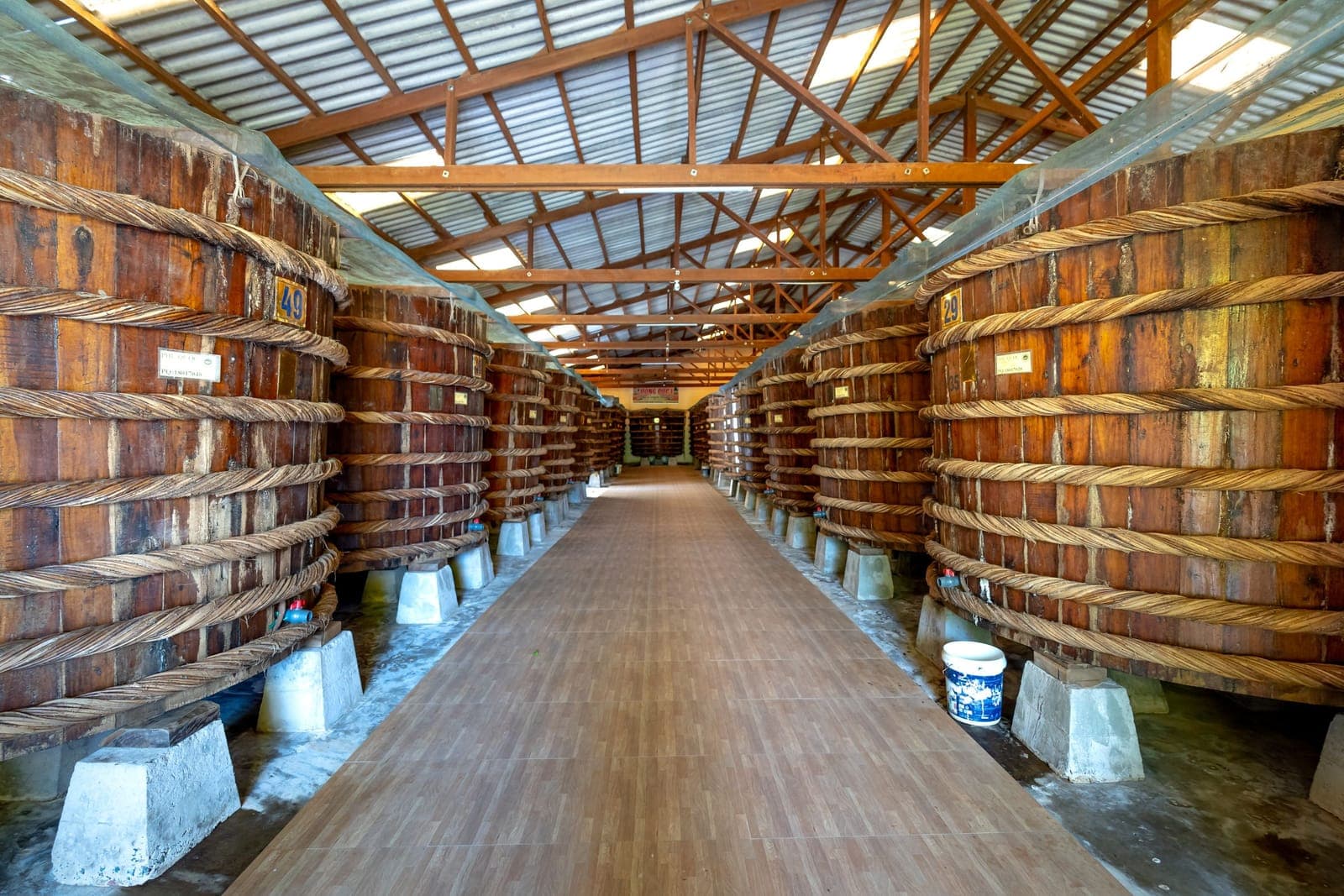
Leave a pot of soybeans to the right molds and microbes for a season and something savory appears that was not there at the start. Fermentation creates umami without adding any, since the mouth-filling savoriness of soy sauce, miso, and fish sauce was locked inside proteins that were always in the bean and the fish. So what took them apart?
Time takes the protein apart
Umami has a chemistry, and it starts with breakage, since whole proteins and nucleic acids taste of very little and what the tongue answers to are their fragments.
Fermentation and aging release free glutamate and nucleotides from proteins and nucleic acids, building umami.1
The savory payoff is a matter of demolition rather than addition, and the demolition crew is a set of enzymes. In the koji-based ferments of East Asia, those enzymes all come from a single mold.
Koji mold, Aspergillus oryzae, secretes amylase and protease enzymes that break starch into sugars and protein into amino acids.2
Protein into amino acids is the half that matters here, because it is free glutamate, released from those proteins, that builds the umami. Give that work months rather than hours and the depth keeps accumulating.
From the same mechanism, many sauces
Soy sauce is the slow version of that breakdown, its flavor accruing over a long ferment rather than arriving all at once, so how long does long have to be?
Soy sauce develops flavor over months of fermentation in which koji enzymes and salt-tolerant microbes break down soybean and wheat proteins.3
Swap the substrate from bean to fish and the same salted, enzymatic breakdown runs its course, this time leaving behind a sauce prized for one compound above all.
Fish sauce is rich in free glutamate produced as enzymes break down anchovy protein during long salted fermentation.4
So one mechanism, protein cut down under salt and time, sits behind sauces that look nothing alike, and reading a label for that pattern tells you where the savory weight will come from. Once you notice it, the pantry looks different. It reorganizes itself around a single idea rather than a shelf of unrelated bottles.
Read it in your own pantry
You cannot rush the enzymes, but you can taste what they leave behind. Opening the pantry door is all the setup this takes.
- Taste a young soy sauce next to a long-aged one: the aged bottle carries more of the free glutamate that months of enzyme work release.
- Add fish sauce a few drops at a time to a broth that tastes flat, since its free glutamate deepens savoriness fast and is easy to overshoot. Go slowly and there is nothing to walk back.
- Reach for a koji product such as miso, soy sauce, or amazake when a dish needs savory depth rather than more salt; the enzymes have already done the breakdown.
- Remember that salt is doing double duty in these ferments: it seasons, but it also holds back spoilage microbes while the salt-tolerant ones work.
- If a homemade ferment tastes thin, the usual cause is too little time, not too little salt. The enzymes need months rather than days, so taste a spoonful and put the lid back on if it is not there yet.
Sources & facts
- 1. Fermentation unlocks umami compounds ↩
- 2. Koji enzymes: starch to sugar, protein to amino acids ↩
- 3. Soy sauce: months of enzymatic breakdown ↩
- 4. Fish sauce: a glutamate powerhouse ↩
Facts without an external link are drawn from the R&Dish reviewed corpus (textbook-level food science).
TopicFermentation & Umami