Fish Aging and Umami: What the K-Value Says About Freshness
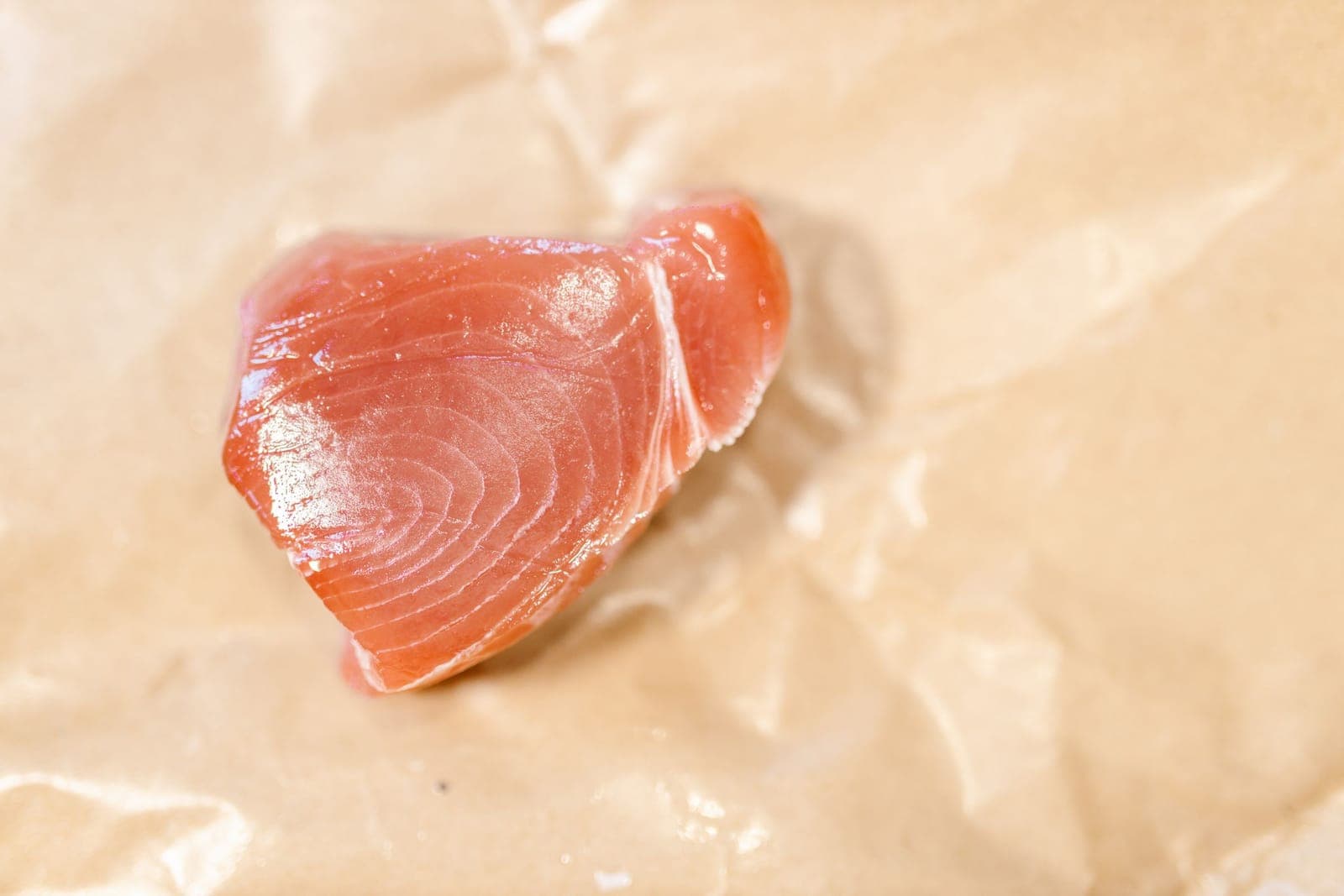
The fish pulled from the tank minutes before it reaches your plate is unquestionably the freshest one on the counter, and it is somehow not the most savory. That lands strangely at a sashimi bar, where freshness is the entire promise. But the umami of fish is largely built after slaughter, and freshness science even puts a number on how far along that building has gone.
The savory payoff arrives after death
So when does that savoriness actually turn up? There is a specific molecule behind it, arriving at the end of a breakdown chain that only starts once the fish stops being alive.
After a fish dies its muscle ATP can no longer be resynthesized and is broken down in sequence to ADP, AMP, and then inosine monophosphate (IMP), the nucleotide responsible for fish's savory flavor, which is why briefly rested fish tastes more umami-rich than fish eaten the instant it is killed.1
So the savory peak is not nailed to the moment of slaughter but sits a little after it, a moving target, and the breakdown that builds it does not politely stop once the IMP has arrived.
As IMP degrades further to inosine and then hypoxanthine, the savory nucleotide is lost and hypoxanthine accumulates, contributing the bitter off-flavor of spoiling fish, so umami-building aging has an upper limit before flavor deteriorates.2
Aging for flavor is a race between two reactions running the same pathway, one stacking up umami while the other quietly trades it away for bitterness. So where is this particular fish right now?
The K-value: a number for where the fish is
Happily, that position is measurable, and food science compresses it into a single percentage.
The K-value rates fish freshness as the percentage of inosine plus hypoxanthine within the total pool of ATP and its breakdown products, so a low K-value indicates a fresher fish and a rising K-value marks progressive autolytic breakdown. A common freshness guide rates fish below 20 percent as very fresh, below 50 percent as moderately fresh, and above 70 percent as no longer fresh.3
You will never run that assay at home, so the part worth keeping is the concept: freshness is not an on-or-off state but a position on a curve, and how fast a fish travels that curve is set by handling and storage.
Working with the window
Temperature is the biggest lever. The direction it pushes is the opposite of what intuition expects, which throws most people the first time they hear it.
Chilling olive flounder rapidly after slaughter hastens the onset of rigor mortis and speeds ATP degradation, so the savory nucleotide IMP accumulates faster in the chilled flesh.4
That result is specific to the olive flounder studied, so treat it as a worked example, not a universal rule. It also points past the fish counter, to why the savory nucleotide is worth chasing across the pantry.
Inosinate, a umami nucleotide, is abundant in meat, fish, and cured products like bonito flakes.5
- Judge fish by where it sits on the freshness curve, not by a single sniff: very fresh, moderately fresh, and past-it are stages, not a pass or fail.
- For fish you will eat raw, keep it cold and continuously chilled from slaughter on, the handling that sped IMP in the flounder study.
- Give firm white fish a short rest under refrigeration for a fuller savory note, and taste it against a just-cut piece to calibrate your own preference.
- Stop well before any bitter or sour edge appears, since that is the pathway tipping past its peak toward spoilage.
- When you want the savory nucleotide without the wait, reach for a cured concentrate such as bonito flakes and let it carry the umami; one spoonful of the resulting broth explains why the stuff earns permanent shelf space.
Sources & facts
- 1. Postmortem ATP to IMP: rested-fish umami ↩
- 2. Aged fish has a ceiling: hypoxanthine bitterness ↩
- 3. K-value: a freshness index for fish ↩
- 4. Icing olive flounder speeds rigor and IMP ↩
- 5. Where inosinate comes from ↩
Facts without an external link are drawn from the R&Dish reviewed corpus (textbook-level food science).
TopicFermentation & Umami