Why Food Spoils in the Fridge Anyway
why does food spoil in the refrigerator
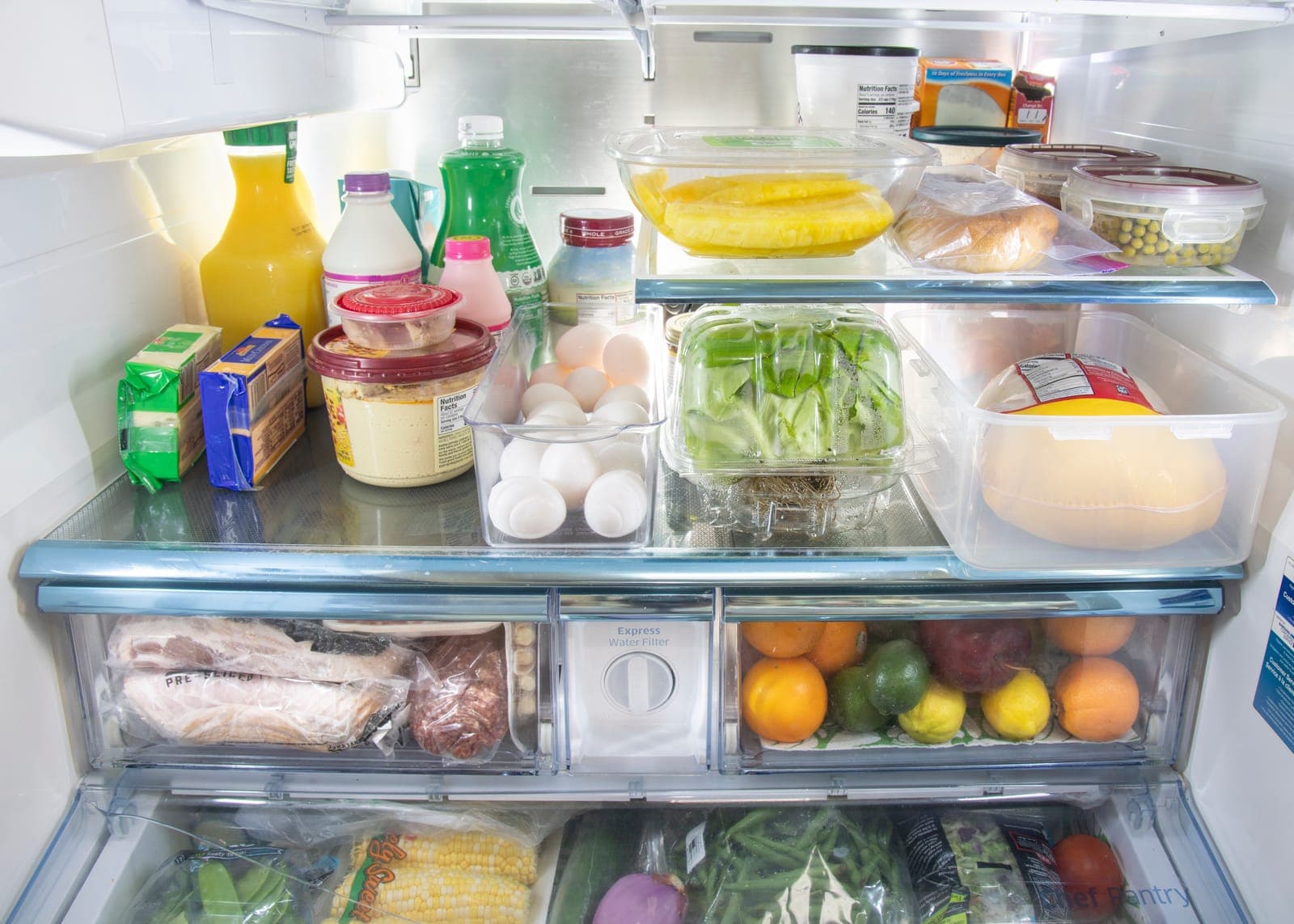
Refrigeration slows bacterial growth rather than halting it, and some bacteria grow at fridge temperatures anyway. That is the whole answer to why a sealed container still turns, and the official guidance says it directly.
Start with the setting itself, since everything downstream assumes it.
The USDA Food Safety and Inspection Service states that refrigerators should be set to maintain a temperature of 40 degrees Fahrenheit or below, that it is important to verify the temperature with an appliance thermometer, and that foods held at temperatures above 40 degrees Fahrenheit for more than 2 hours should not be consumed.1
Note the second half of that: verify it with a thermometer. A dial marked one to five is not a temperature reading, and a fridge can sit several degrees off where the dial suggests.
Cold does not stop growth
The first category is the one you notice, and it is at work below the setting above.
The USDA Food Safety and Inspection Service states that spoilage bacteria, the kind that cause foods to deteriorate and develop unpleasant odors, tastes, and textures, can grow at low temperatures such as in the refrigerator, and that they eventually cause food to develop off or bad tastes and smells.2
That is the smell in the back of the fridge. It is doing its work slowly at that temperature rather than not at all, which is why time in the fridge is still time.
The category that does not announce itself
The second family behaves differently, and the difference is the reason smell is not a reliable instrument.
The USDA Food Safety and Inspection Service distinguishes two families of bacteria in refrigerated food and states that pathogenic bacteria, the kind that cause foodborne illness, can grow rapidly in the Danger Zone between 40 and 140 degrees Fahrenheit but do not generally affect the taste, smell, or appearance of a food, so one cannot tell that a pathogen is present.3
So the two families are not the same bacteria at different stages. Something can smell fine and still carry the kind that does not change the smell, and something can smell off from the kind that only ruins dinner. Neither observation tells you about the other.
And at least one of them is comfortable in the cold.
The USDA Food Safety and Inspection Service states that some bacteria such as Listeria monocytogenes thrive at cold temperatures and, if present, will multiply in the refrigerator over time and could cause illness.4
Which is what closes the loop on the original question. Time in a working fridge is not neutral storage, it is slow storage, and for some organisms it is simply storage.
Where the clock runs fast
The fridge is the slow band. The guidance also describes the fast one, and the contrast is what makes the rules about leaving things out make sense.
The USDA Food Safety and Inspection Service states that bacteria grow most rapidly between 40 and 140 degrees Fahrenheit, doubling in number in as little as 20 minutes, and that food should never be left out of refrigeration over 2 hours, or more than 1 hour when the temperature is above 90 degrees Fahrenheit.5
Twenty minutes to double, at its fastest. That is the arithmetic behind the two hour limit, and behind why it halves in hot weather.
What this does and does not tell you
This post is about how storage works, not about judging any particular container. Since the guidance itself says pathogens do not generally change taste, smell, or appearance, no article and no photograph can tell you whether a specific item is safe. Follow the official time and temperature guidance for your food, and when the guidance says discard, discard.
- Put an appliance thermometer in the fridge and read it, since the guidance asks for verification rather than trust in the dial.
- Read it again in a few different spots. Door shelves and the back of the bottom shelf are rarely the same temperature.
- Adjust the setting if the reading is above 40 degrees Fahrenheit, then check again the next day.
- Keep the door closed while you decide what you want, since every opening warms the whole cabinet.
- Date leftovers when they go in, so the decision later is made from a label rather than from memory.
- Follow the published storage times for each food rather than judging by smell, and follow official guidance on when to discard.
Sources & facts
- 1. 40 degrees Fahrenheit, verified with a thermometer ↩
- 2. Cold slows spoilage bacteria, it does not stop them ↩
- 3. Why a pathogen leaves no smell behind ↩
- 4. The pathogen that grows in the cold ↩
- 5. Doubling in 20 minutes, and the hot-day one-hour cut ↩
Facts without an external link are drawn from the R&Dish reviewed corpus (textbook-level food science).
TopicKitchen Safety