Why Highball Ratios Never Match: Ice and Dilution
why does the same highball ratio taste different
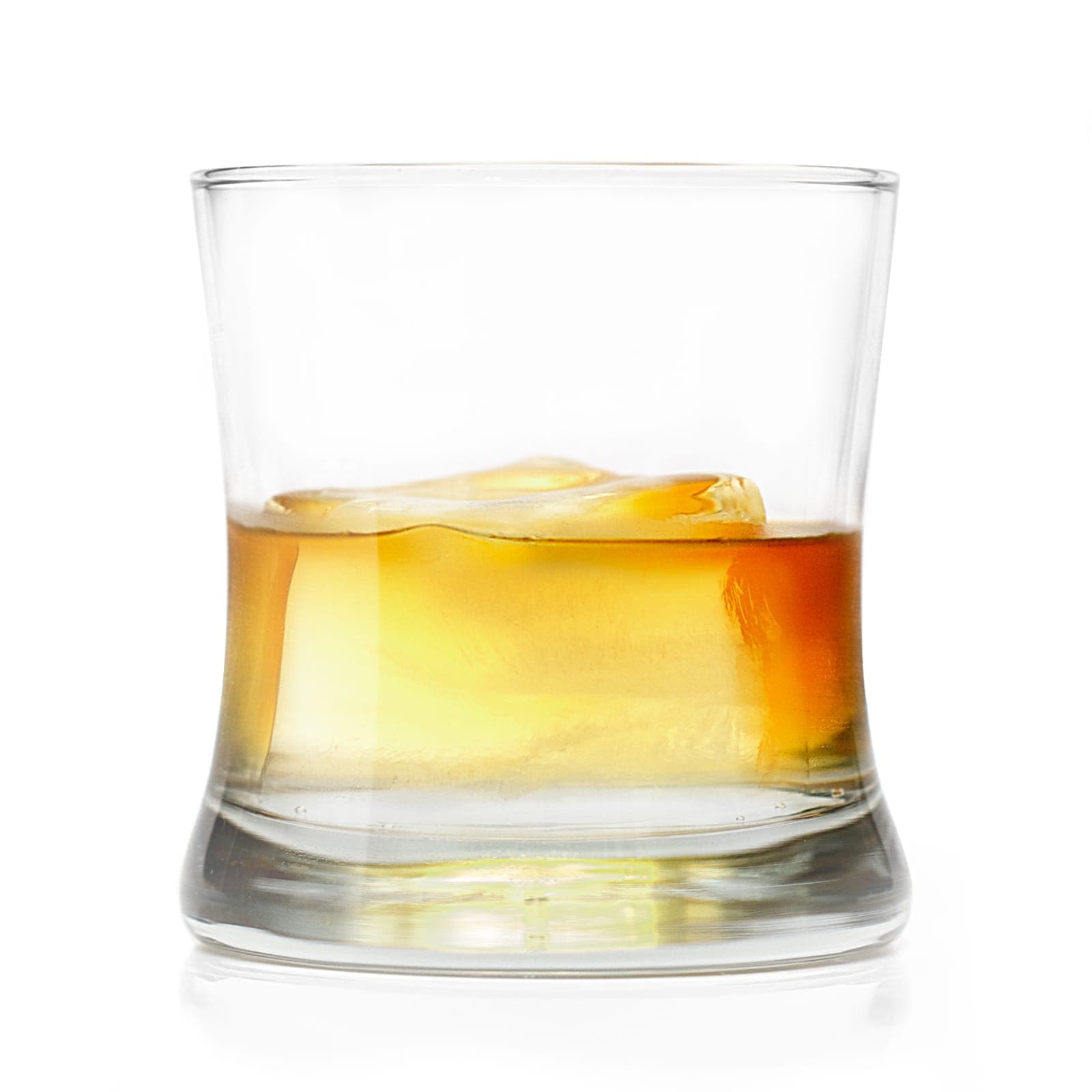
The ratio you pour is not the ratio you drink. Ice melts into the glass the entire time it sits there, so the strength on your tongue is the poured ratio plus however much water the ice has handed over, which is why one golden ratio never transfers between two kitchens.
That number on the bottle is a starting point, and it is worth being precise about what it measures.
The alcohol content of a spirit is measured as alcohol by volume, the percentage of ethanol in the liquid.1
Pour that into a glass with ice and the percentage begins moving immediately. Where it lands depends on the ice, not on the recipe card.
The ice is not there to be cold
It is tempting to think of ice as a cold object sitting in a drink. The physics says otherwise, and the gap between the two ideas is large.
Ice cools a drink mainly by melting, not by being cold. Melting 1 kilogram (2.2 pounds) of ice absorbs 334 kilojoules of heat, the same amount of energy needed to raise the temperature of 1 kilogram of liquid water from 0 degrees Celsius (32 degrees Fahrenheit) to 79.8 degrees Celsius (176 degrees Fahrenheit), and the ice draws in that heat with no rise in its own temperature until the phase change is complete. This is why a small mass of ice produces a large drop in a drink's temperature.2
Melting is where nearly all the chilling comes from, which means chilling and watering down are not two separate events you can pick between. They are the same event, seen from two sides.
How cold the ice is matters far less than the fact that it melts. Ice taken from a home freezer is below 0 degrees Celsius (32 degrees Fahrenheit), and that below-freezing ice contributes sensible heat as it warms toward 0 degrees Celsius, with the specific heat of ice being about 2090 joules per kilogram per degree Celsius, in addition to the much larger latent heat of 334 kilojoules per kilogram absorbed on melting. Because the melting term dominates, the ice's starting temperature makes only a small correction to a drink's final temperature.3
So a freezer set colder does not buy you a stronger drink. What actually moves the dial is how fast the ice is able to melt.
Shape decides the speed
This is where the big clear cube and the bag of crushed ice stop being an aesthetic choice and start being a variable.
The rate of heat transfer by conduction into ice is directly proportional to the contact surface area. Crushed ice presents far more surface area than one large cube of the same mass, so it exchanges heat with the drink faster; because the transferred heat is what melts the ice, faster heat exchange means both faster chilling and faster melting. A single large cube, with less surface area, chills and dilutes more slowly.4
One large cube chills slowly and waters slowly. Crushed ice does both quickly, so the same pour drunk over crushed ice reaches a weaker place sooner. Neither is wrong. They just land in different places by the time you get to the bottom.
The glass takes its cut too
There is a third party in the glass that nobody counts, and it takes its share before the first sip.
A glass has its own heat capacity: changing its temperature takes or releases heat in proportion to its mass, its specific heat, and the size of the temperature change, with glass having a specific heat of about 840 joules per kilogram per degree Celsius. A room-temperature glass therefore gives up heat to a colder drink as the two move toward thermal equilibrium. Pre-chilling the glass first removes that heat, so it no longer draws heat from the drink and ice.5
A room temperature glass has to be cooled by something, and that something is your ice. Chilling the glass first means that heat is already gone, so the ice can spend itself on the drink instead.
Find your own ratio
Since dilution is doing half the work, the only ratio worth trusting is the one you measure in your own glass with your own ice. It takes one evening.
- Pick one glass, one ice format, and one whisky, and hold all three constant for the whole session.
- Pour a 1:3 and a 1:4 with the same ice and the same fill, side by side.
- Taste both immediately, then again after five minutes, then again after ten.
- Note where each one peaks for you rather than which is stronger at the start.
- Repeat the whole thing with crushed ice instead of a large cube.
- If everything tastes flat, the glass was probably warm. Chill it and run the pair again.
- Write down the pour that worked with the ice you actually own, then stop looking for the universal number and drink it.
Sources & facts
- 1. Alcohol by volume, defined ↩
- 2. Why ice chills: melting, not coldness ↩
- 3. Ice temperature vs melting: which chills more ↩
- 4. Ice size: surface area sets chill and dilution rate ↩
- 5. Pre-chilling a glass: removing its heat load ↩
Facts without an external link are drawn from the R&Dish reviewed corpus (textbook-level food science).
TopicBar & Spirits