Doenjang and Gochujang Fermentation Science: How Meju Builds Depth
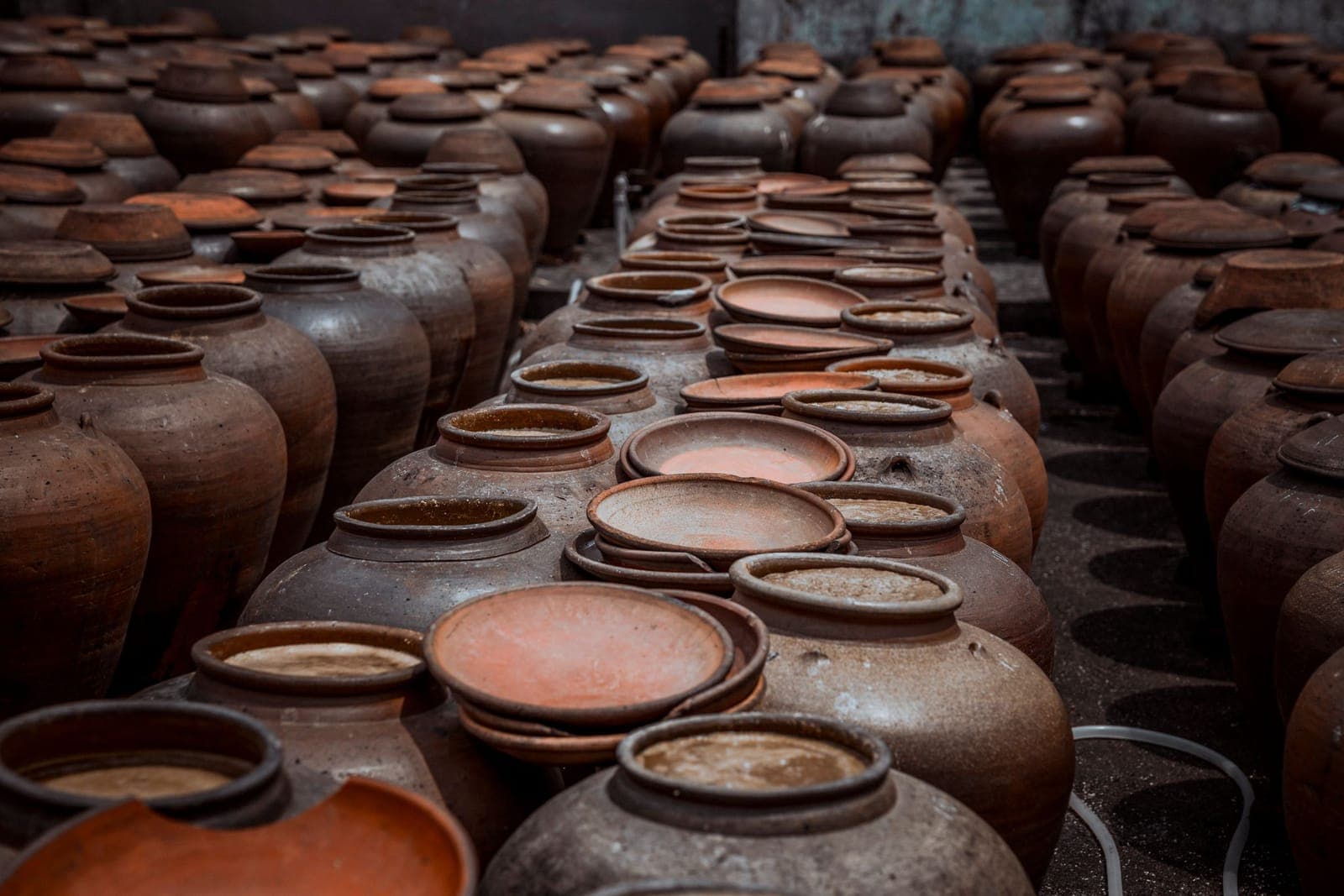
A brick of soybeans left to dry and ferment under the eaves does not look like the beginning of anything. Yet doenjang and gochujang fermentation both trace back to exactly that: a humble block called meju. The deep, savory backbone of Korean stews and sauces is built here, slowly, by molds and bacteria doing work that no amount of stirring or last-minute seasoning can shortcut.
It starts with a block of beans
Before there is any paste, there is meju. Soybeans get cooked, pressed into blocks, and then left alone to be colonized.
Traditional gochujang and doenjang begin with meju, blocks of fermented soybeans colonized by molds and bacteria.1
Those molds and bacteria are the whole point. As they grow through the block they establish the living culture that will later drive the fermentation, breaking the soybean protein down over months, and doenjang carries this meju forward almost directly while gochujang takes a related path, folding in grain and chili, laying the same savory foundation. Skip or rush this stage and no shortcut waits downstream; the depth a good paste carries was decided months earlier, on a drying rack.
Where the savory depth comes from
Taste a spoonful of gochujang on its own and something is left over that sweet and spicy do not account for. What is it?
Gochujang develops its savory depth from glutamate released during the fermentation of soybean and rice koji.2
So the chili and the sweetness are a layer laid over a savory base that fermentation built out of the soybean and rice koji underneath. And that base is not a Korean-paste peculiarity.
Fermentation and aging release free glutamate and nucleotides from proteins and nucleic acids, building umami.3
Meju, then, is one entry point into a mechanism that fermented foods everywhere share. Cheese, soy sauce, cured ham, and a crock of doenjang are not obviously related, yet each is a version of the same slow trade: proteins taken apart over time into the small molecules that read as savory. What makes doenjang and gochujang distinct is the substrate and the long, patient aging, not a different chemistry.
Taste the fermentation for yourself
You do not have to make meju yourself to notice what it does. Work through the steps below and the mechanism comes up onto your tongue.
- Compare a young, mass-market doenjang with a long-aged one; the aged paste usually tastes deeper, a sign of the glutamate that more fermentation time releases.
- Taste gochujang on its own before cooking with it: past the sweet and the heat, look for the savory backbone the soybean and rice koji fermentation built.
- Use these pastes as a savory base, not just a seasoning at the end; stirring a spoonful into a stew early lets that depth spread through the dish.
- If a homemade or young paste tastes flat, nothing has gone wrong; it usually just needs more aging, since the glutamate that gives depth accumulates over months of fermentation.
- Remember the order of operations: molds and bacteria colonize the meju first, and only then does the long breakdown that builds savory depth begin, which is the whole stretch of time you swallow in one spoonful of stew made with a properly aged paste.
Sources & facts
- 1. Meju: the root of Korean soybean pastes ↩
- 2. Gochujang depth: where the savory notes come from ↩
- 3. Fermentation unlocks umami compounds ↩
Facts without an external link are drawn from the R&Dish reviewed corpus (textbook-level food science).
TopicFermentation & Umami