Kimchi Salt Science: Why the Salt Decides How Your Kimchi Turns Out
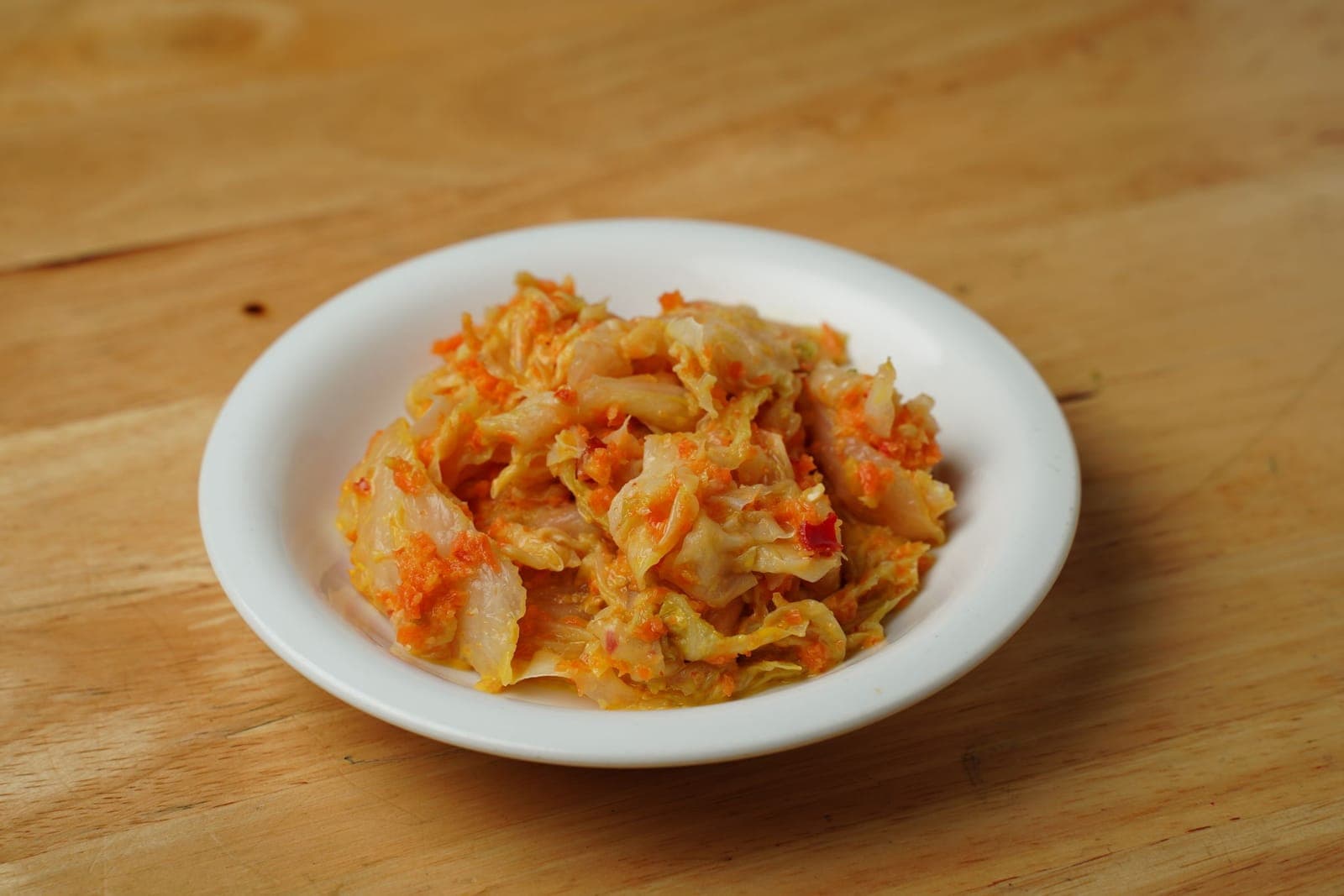
Cabbage, chili, garlic, and a careful hand with the salt. It reads like a recipe, but the salt on that list is not really behaving like an ingredient. Get the kimchi salt concentration right and the jar heads exactly where you wanted it to go. Get it wrong and the same cabbage turns to mush, or just turns. So how does a couple of spoonfuls of salt end up deciding the fate of a whole batch?
What the salt is actually doing
Every fresh vegetable arrives covered in microbes you cannot see, a few of them useful and plenty of them not. The first thing that happens to a head of cabbage is a salting, and the fermenting only starts after that. Why in that order?
Salting vegetables before fermentation favors salt-tolerant lactic acid bacteria while suppressing spoilage microbes.1
Salt is a filter as much as a seasoning, then. The organisms that shrug it off are a narrow, very useful group, and almost everything that happens in the jar from that point on is their doing. One job in particular is theirs.
Vegetable fermentations like kimchi and sauerkraut rely on lactic acid bacteria that convert sugars into lactic acid.2
That is where the sour smell of a ripe jar comes from: bacteria working through the cabbage's own sugars and leaving acid behind. Nobody added the sourness, it grew there. How hard the salt tips the odds in their favor comes down to how much of it went in.
Somewhere between 2 and 3 percent
Typical vegetable fermentations use a salt concentration around 2 to 3 percent to favor lactic acid bacteria.3
Too little and spoilage microbes get a foothold; too much and even the bacteria you are rooting for start to struggle. There is a reason the traditional figure is a small range rather than one exact number: vegetables differ in how much water and sugar they carry, and a ferment will forgive a little drift. Drift far in either direction, though, and the balance the salt was holding simply gives way. Salt earns that job by doing something beyond tasting salty.
Salt preserves food by lowering water activity, limiting the water available for microbial growth.4
Less free water means less room for anything to grow in, which is the same reason a salt cure has kept food edible for as long as people have bothered to cure it. Inside a ferment that pressure falls hardest on the spoilage organisms, which clears the field for the salt-tolerant ones.
Salting a jar of your own
Think of the salt as a setting rather than a garnish and the rest of the jar mostly takes care of itself. Here is where to put it.
- Aim for a salt concentration around 2 to 3 percent of the vegetable's weight, and weigh it rather than eyeballing it, because the window that favors lactic acid bacteria really is that narrow.
- If you are going to miss, miss salty: under-salting opens the door to spoilage microbes before the lactic acid bacteria have had a chance to acidify the jar.
- Over-salting slows everything down, including the bacteria you want, so a stalled, overly salty ferment usually needs patience or a little water, not more salt.
- Keep the vegetables submerged under their brine, since an exposed surface sits in air, where salt-tolerant molds and spoilage microbes have the advantage.
- Expect the sourness to build as the bacteria convert sugars into lactic acid, so taste as it goes and move it to the fridge once it hits the tang you like.
Sources & facts
- 1. Salting: steering the ferment ↩
- 2. Kimchi and kraut: lactic acid at work ↩
- 3. Ferment salt: about 2 to 3 percent ↩
- 4. Salt as a preservative ↩
Facts without an external link are drawn from the R&Dish reviewed corpus (textbook-level food science).
TopicFermentation & Umami