Is Raw Fish Safe to Eat at Home? What Freezing Actually Requires
is raw fish safe to eat at home parasites
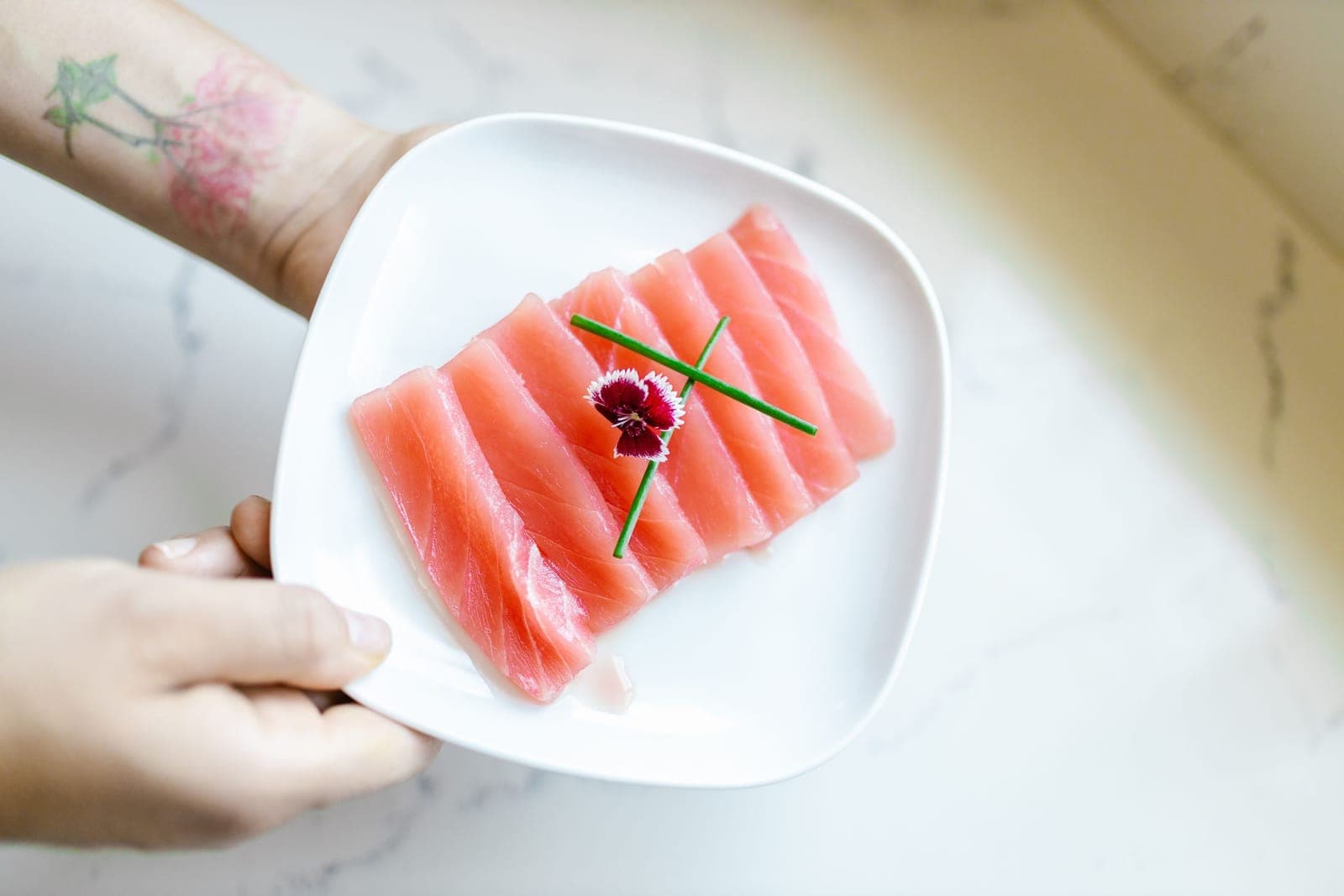
Buy a pack of fish in the afternoon and plan to slice it that evening, and there is a step missing in between. Eating raw fish at home is not something to improvise. The single step that makes it reasonable is freezing done to a specific standard, because that is what reliably kills the parasite larvae fresh fish can carry. If a fish was not frozen under those conditions, the safer default is to cook it rather than serve it raw.
Freezing is the step that matters
Freshness is not the safety lever here, parasite control is, so what temperature and for how long?
Parasite larvae in raw or undercooked seafood are a human-health hazard, and freezing at defined conditions is sufficient to kill them: minus 20 degrees Celsius or below for 7 days, or minus 35 degrees Celsius or below until solid and then held at minus 35 degrees Celsius or below for 15 hours, or minus 35 degrees Celsius or below until solid and then held at minus 20 degrees Celsius or below for 24 hours.1
Those conditions assume a freezer that reliably reaches them. If you are not certain yours does, treat commercially frozen or sushi-grade fish, frozen to that standard, as the baseline rather than assuming a home unit matches it.
The rice is a safety step too
Sushi rice is not only about flavor and texture, because the vinegar does something measurable to the environment bacteria would grow in, which makes the rice a safety step too.
Adding vinegar to cooked sushi rice acidifies it, and at a pH of 4.2 or lower most pathogenic bacteria, notably Bacillus cereus and Staphylococcus aureus, do not grow or produce toxins, with 4.6 or below as the accepted retail standard.2
That acidity is a documented barrier, not a folk precaution, but it covers only the rice and only at the stated pH. The fish, the board, and the fridge still need their own handling.
Keep everything cold and separate
Two habits carry most of the remaining risk, and neither is specific to fish, since both apply to everything else on the board.
Raw meat juices can cross-contaminate ready-to-eat foods, so separate cutting boards and utensils are recommended. The separate-board practice is a recommendation in United States and Codex food hygiene guidance rather than a property of the contamination itself.3
The same rule applies to raw fish and its juices. Temperature is the other lever, and the fridge slows the clock without stopping it.
Refrigeration at or below 4 degrees Celsius slows but does not stop the growth of most spoilage and pathogenic bacteria. The 4 degrees Celsius figure is the refrigeration target in United States guidance, or 40 degrees Fahrenheit, while other jurisdictions set it at 5 degrees Celsius or below.4
- Start from fish frozen to the guidance conditions, or cook the fish instead. Do not treat looks-fresh or smells-fine as a substitute for that freezing.
- Keep raw fish and its juices away from anything you will eat as is, using separate boards and knives, and wash them before they touch other food.
- Hold the fish at refrigerator temperature right up until you cut it, and return any leftovers to the fridge promptly rather than leaving them out.
- If you acidify sushi rice, follow a tested recipe with enough vinegar to reach the stated pH, rather than seasoning to taste alone.
- When you are unsure whether a fish was frozen correctly, cook it. Raw is the option you earn with the freezing step, not the default.
Sources & facts
- 1. Raw fish safety: freezing that kills parasites ↩
- 2. Sushi rice pH: acidity that curbs pathogens ↩
- 3. Prevent cross-contamination ↩
- 4. Cold slows, doesn't stop, bacteria ↩
Facts without an external link are drawn from the R&Dish reviewed corpus (textbook-level food science).
TopicKitchen Safety