Shaken vs Stirred Cocktail: What the Difference Actually Is
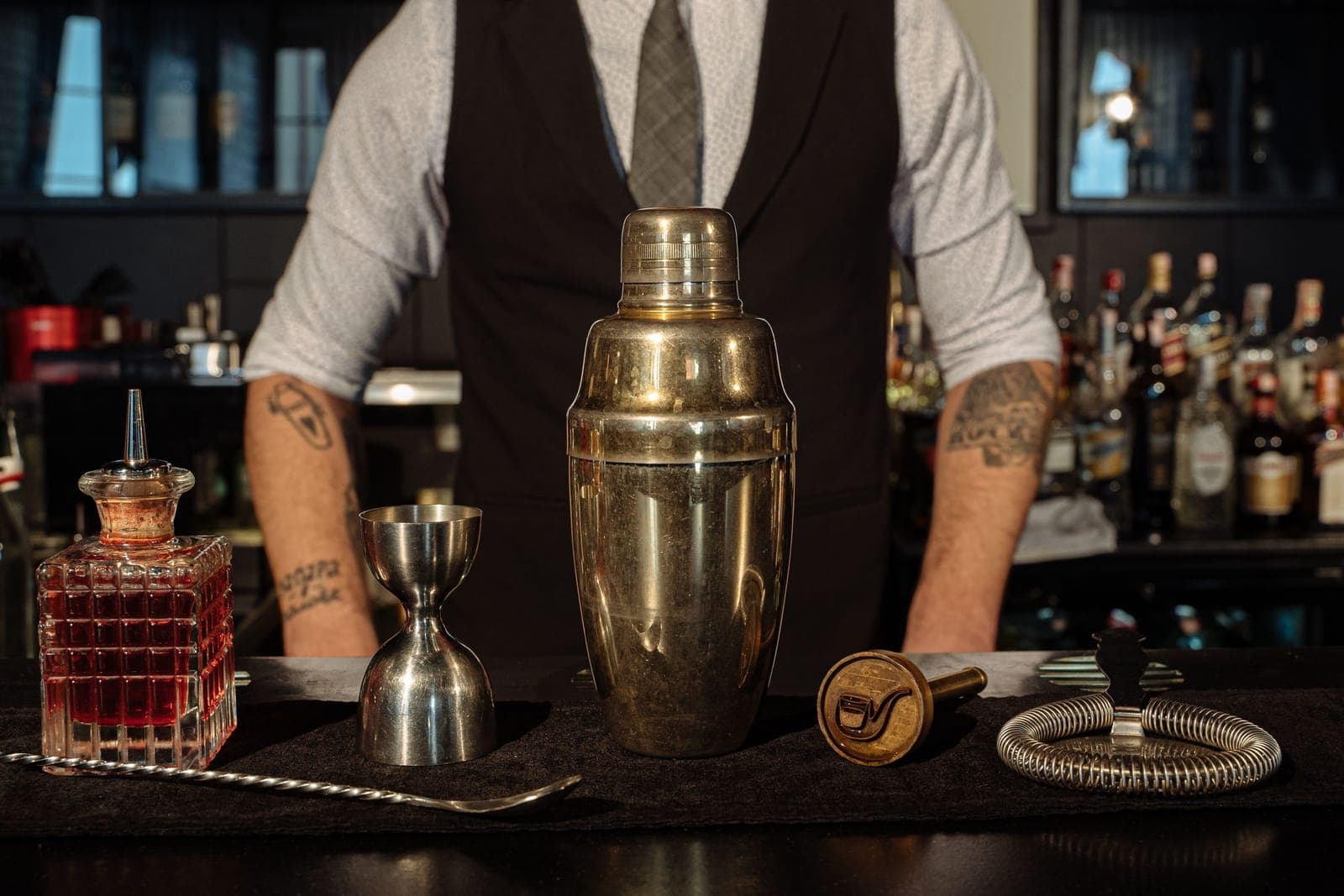
Bond's line made shaken versus stirred sound like a matter of taste, or of attitude. Bartenders split the two for a much less glamorous reason: physics in the glass. Both methods do the same first job, chilling the drink against cold ice. So where do they actually part ways?
What each method does to the glass
Start with the shaker, the louder of the two. Two things happen at once in a single burst.
Shaking a cocktail with ice chills and dilutes it at the same time as the ice melts.1
It also whips in tiny air bubbles, which is why a shaken drink pours cloudy and lively, with a brief foam on top that fades as you watch. Stirring is the quiet opposite. Nothing splashes and nothing froths.
Stirring chills a cocktail with less dilution and aeration than shaking, keeping spirit-forward drinks clear.2
Neither method is trying to avoid water, though, and that surprises people. Dilution is not a side effect to minimize. A drink built without it tastes hot and sharp, and the melted ice is part of what makes a cocktail taste finished rather than raw.
Proper dilution is essential to a balanced cocktail, softening the alcohol and integrating the flavors.3
Why does a splash of melted ice do so much, out of all proportion to how little of it there is? It comes down to what water does to a spirit.
Diluting a spirit with water lowers the ethanol concentration and softens the perception of harsh congeners.4
So the choice follows the drink. A sour with citrus or egg wants the harder chill, the extra water, and the frothy lift that only shaking gives. A martini or a Negroni wants to stay cold and clear, so you stir and let it dilute more gently.
Choose by the drink
Once you know what each method is for, choosing is simpler than it looks.
- Reach for the shaker when the drink carries citrus juice, egg white, or cream: those want the extra chill, dilution, and aeration.
- Stir when the drink is all spirits, like a martini or Manhattan, where you want it cold and crystal clear rather than frothy.
- Shake hard for about ten to fifteen seconds, until the tin frosts over in your hands.
- Stir for a longer twenty to thirty seconds, since stirring chills more slowly than shaking.
- Use plenty of ice either way; a full glass of ice melts slower and gives you steadier control over dilution.
- Taste before you strain. If a stirred drink bites, it usually needs a little more dilution rather than less, so give it a few more seconds and taste again.
Sources & facts
- 1. Shaking: chill and dilution together ↩
- 2. Stir or shake ↩
- 3. Dilution makes a cocktail ↩
- 4. Water softens a spirit ↩
Facts without an external link are drawn from the R&Dish reviewed corpus (textbook-level food science).
TopicBar & Spirits