How Traditional Korean Soju Is Made: Rice, Nuruk, and the Still
how traditional korean soju is made
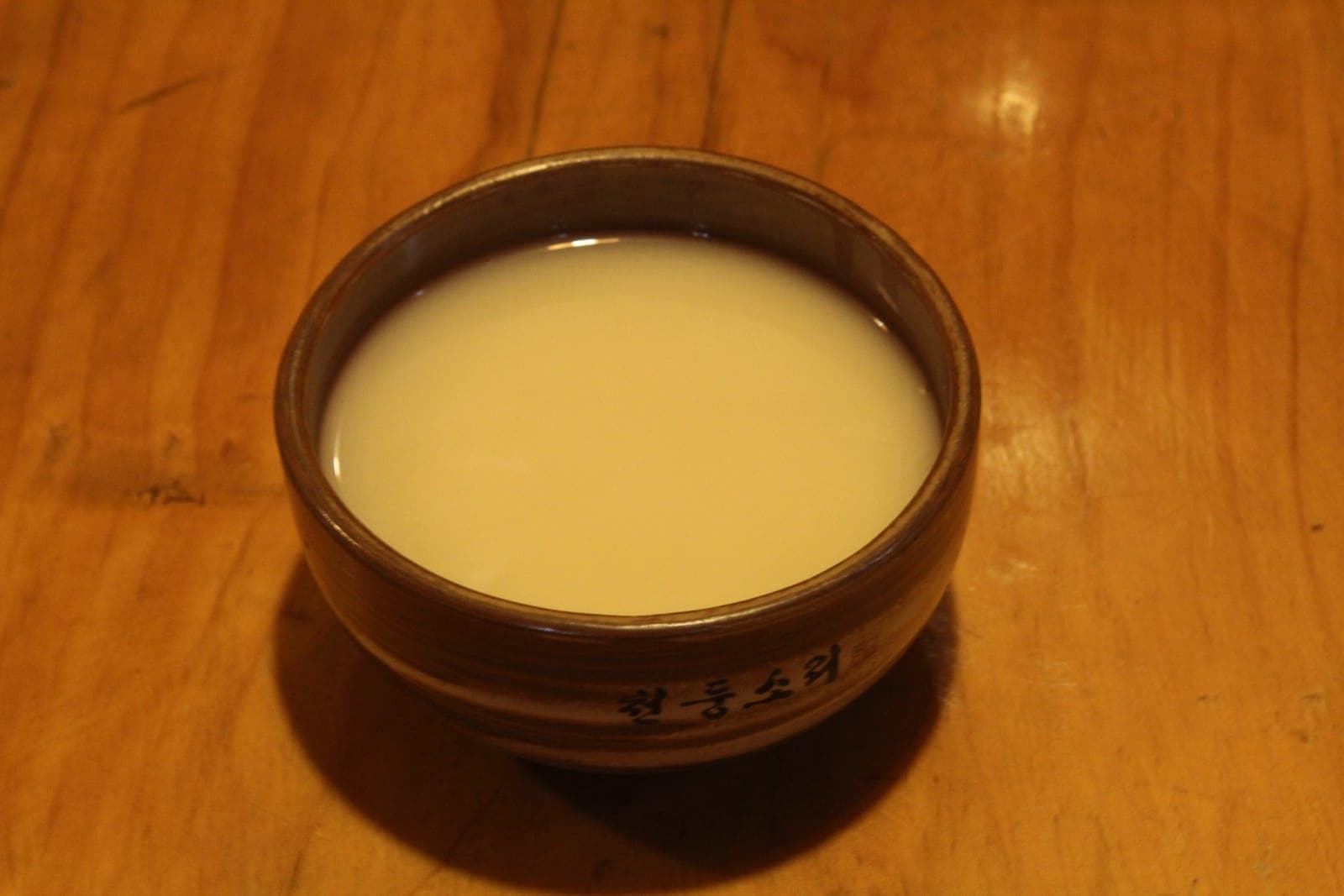
Pour a traditional pot-distilled soju next to the green-bottle kind most people know, and you would hardly guess the two share a name: one is a diluted industrial spirit, the other is rice run through a pot still. So where do they part ways? How traditional Korean soju is made comes down to two steps, a live fermentation and a careful distillation, and the character of the finished spirit gets set in both of them. It begins not with alcohol but with a lump of grain and mold called nuruk.
Nuruk does the fermenting
Scatter yeast over cooked rice and nothing much happens. Yeast cannot eat starch directly, so something has to pick the lock first, and for centuries in Korea that job has belonged to nuruk.
Nuruk, the traditional Korean fermentation starter, carries molds, yeasts, and bacteria that saccharify grain starch.1
The molds in nuruk break the starch down into sugars, and the yeasts riding along take those sugars and turn them into alcohol. Nuruk's work ends right there. Everything downstream belongs to the still, which now has a fermented rice mash to work on.
Traditional pot-distilled Korean soju is made by distilling rice fermented with nuruk.2
Where the rough edge comes from
It would be tidy if fermentation stopped at ethanol, but yeast is also busy keeping house, and the byproducts of that housekeeping include a family of heavier, bulkier alcohols.
Higher alcohols, called fusel alcohols, form during fermentation from yeast amino-acid metabolism and taste harsh and solvent-like.3
Some of those heavier compounds ride through the still and land in the distillate, and they are the usual suspects when a young soju scrapes at your tongue. This stays an attribution, though, rather than a settled fact.
The rough, drying character of young pot-distilled rice spirits is commonly attributed to fusel alcohols and congeners carried over in distillation.4
It also explains why one bottle can read so differently depending on where you take the strength. Two pours from the very same run, one neat and one gently watered, can feel like two different drinks, and bringing the proof down with water is the oldest lever a distiller has.
Diluting a spirit with water lowers the ethanol concentration and softens the perception of harsh congeners.5
Taste it like a maker
You do not need a still of your own for any of this. A couple of bottles from a shop and a little water are enough to hear the fermentation and the cut on your own palate.
- Buy a traditional pot-distilled soju, not the diluted green-bottle kind, and read the label for rice and nuruk as the base.
- Nose it neat first and note any solvent-like sharpness, the signature of fusel alcohols carried over.
- Add water a few drops at a time and taste after each, watching the harsh edge soften as the proof drops; you cannot take water back out, so going slowly is the easier path.
- Compare a younger and a more matured bottle to feel how much of the rough character time and resting take off.
- Keep the harsh top-note and the drying finish as separate notes, since they point back to different steps, and one more sip with those notes beside you pulls the two sensations further apart.
Sources & facts
- 1. Nuruk: Korea's grain-fermenting starter ↩
- 2. Distilled soju: rice and nuruk ↩
- 3. Fusel alcohols: the harsh higher alcohols ↩
- 4. Young soju's rough edge ↩
- 5. Water softens a spirit ↩
Facts without an external link are drawn from the R&Dish reviewed corpus (textbook-level food science).
TopicBar & Spirits