Agar vs Gelatin: Why Only One of Them Melts in Your Mouth
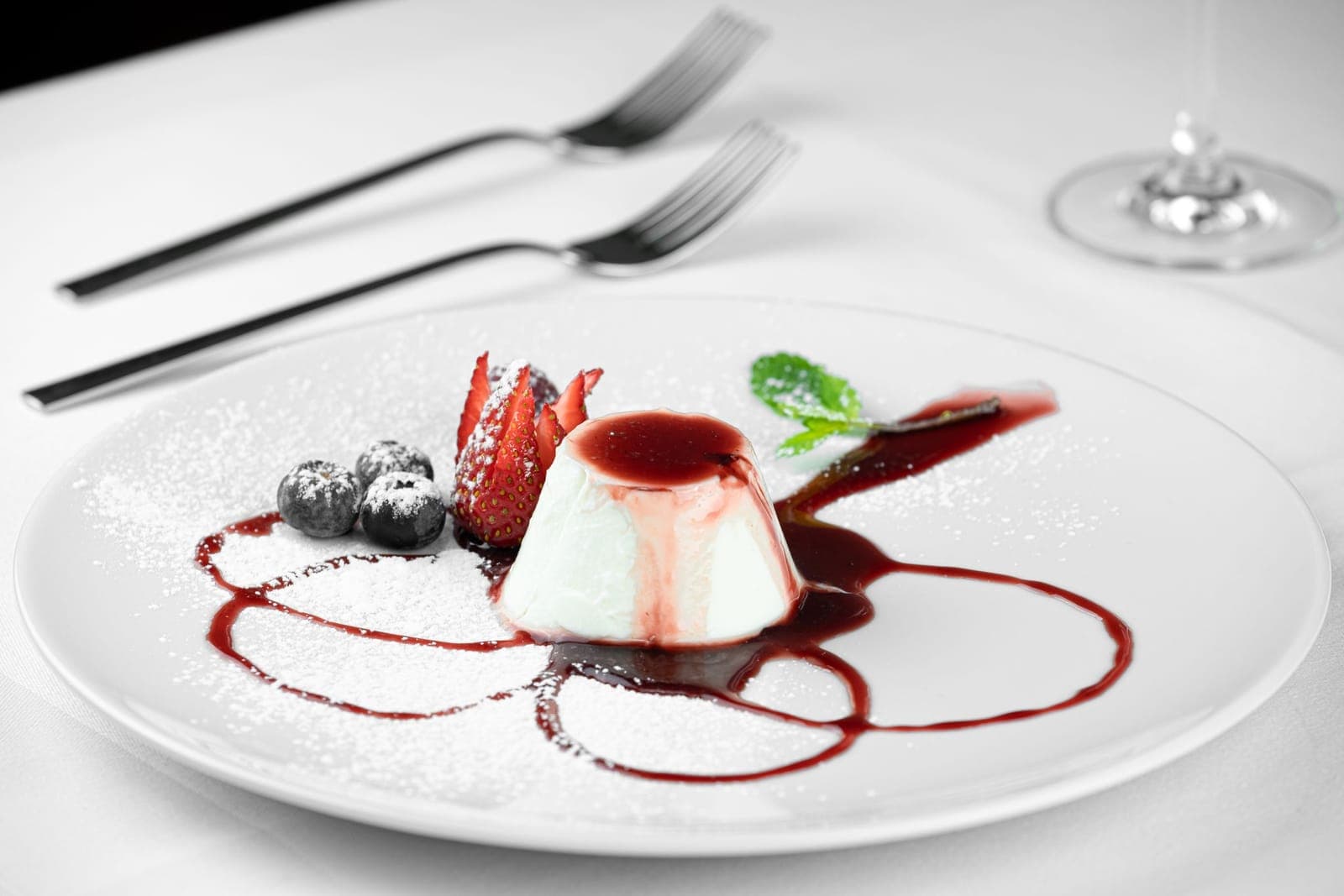
Swap agar for gelatin one-for-one and the dessert simply will not set. The agar vs gelatin difference is not a small substitution, though it is easy to assume otherwise, because both start out as a hot liquid that firms as it cools and they look like the same trick sold in two packets. One of them melts the second it touches your tongue, while the other holds its shape on a warm plate and refuses to give. So which is which?
One holds the heat, one does not
Agar comes out of seaweed, and it will happily set on its own once you dissolve it, boil it, and let it cool. How hot does the pan have to get before a set jelly turns back into liquid?
Agar, extracted from seaweed, sets into a firm gel and melts only well above the temperature at which it solidifies.1
That is why an agar jelly can sit out on a warm buffet all afternoon and still hold the edges you cut into it. Gelatin lives at the opposite end.
Gelatin melts near body temperature, giving desserts a melt-in-the-mouth quality.2
So the question narrows to one thing, which is where you want the gel to give way: on your tongue means gelatin, in a hot room means agar. The same yardstick works on the newer powders a kitchen keeps on the shelf.
There are more than two on that shelf
Agar and gelatin hold the two ends, but the space between them is not empty, so why would anyone buy gellan gum on top of the classics?
Gellan gum forms gels ranging from firm and brittle to soft depending on the calcium and salt present.3
Plenty of jobs do not call for a set gel at all. Sometimes a sauce only needs to sit a little heavier on the spoon and keep whatever is floating in it from sinking to the bottom.
Xanthan gum thickens liquids at low concentrations and holds its viscosity across a wide temperature and pH range.4
So the shelf is closer to a single dial that runs from a firm heat-proof set, through a soft melt, down to a plain thickened pour. Decide on the texture first and the dial more or less picks itself.
Which one, and when
Choosing goes faster than you would think, so settle the serving temperature and the mouthfeel you are after first and the rest follows.
- Reach for gelatin when you want a dessert that melts on the tongue and will be served cold, like panna cotta or a soft jelly.
- Reach for agar when the gel has to hold on a warm plate or a hot buffet, or when you want a clean vegetarian set.
- Do not swap agar and gelatin one-for-one: they set and melt at different points, so it saves a lot of grief to follow a recipe written for the one you are using.
- Try gellan gum when you want to dial texture from brittle to soft, adjusting with the calcium and salt already in the mix. If the first batch misses, nudge it and go again.
- Choose xanthan gum when you only need to thicken a sauce or hold a suspension, not to set a solid gel. Once it coats the back of a spoon and stays there for a beat, take it to the table.
Sources & facts
- 1. Agar: a heat-stable gel ↩
- 2. Gelatin melts in the mouth ↩
- 3. Gellan: firm to soft gels ↩
- 4. Xanthan: a robust thickener ↩
Facts without an external link are drawn from the R&Dish reviewed corpus (textbook-level food science).
TopicEveryday Science