Bread Flour vs All-Purpose: Can You Swap Them?
can I use all purpose flour instead of bread flour
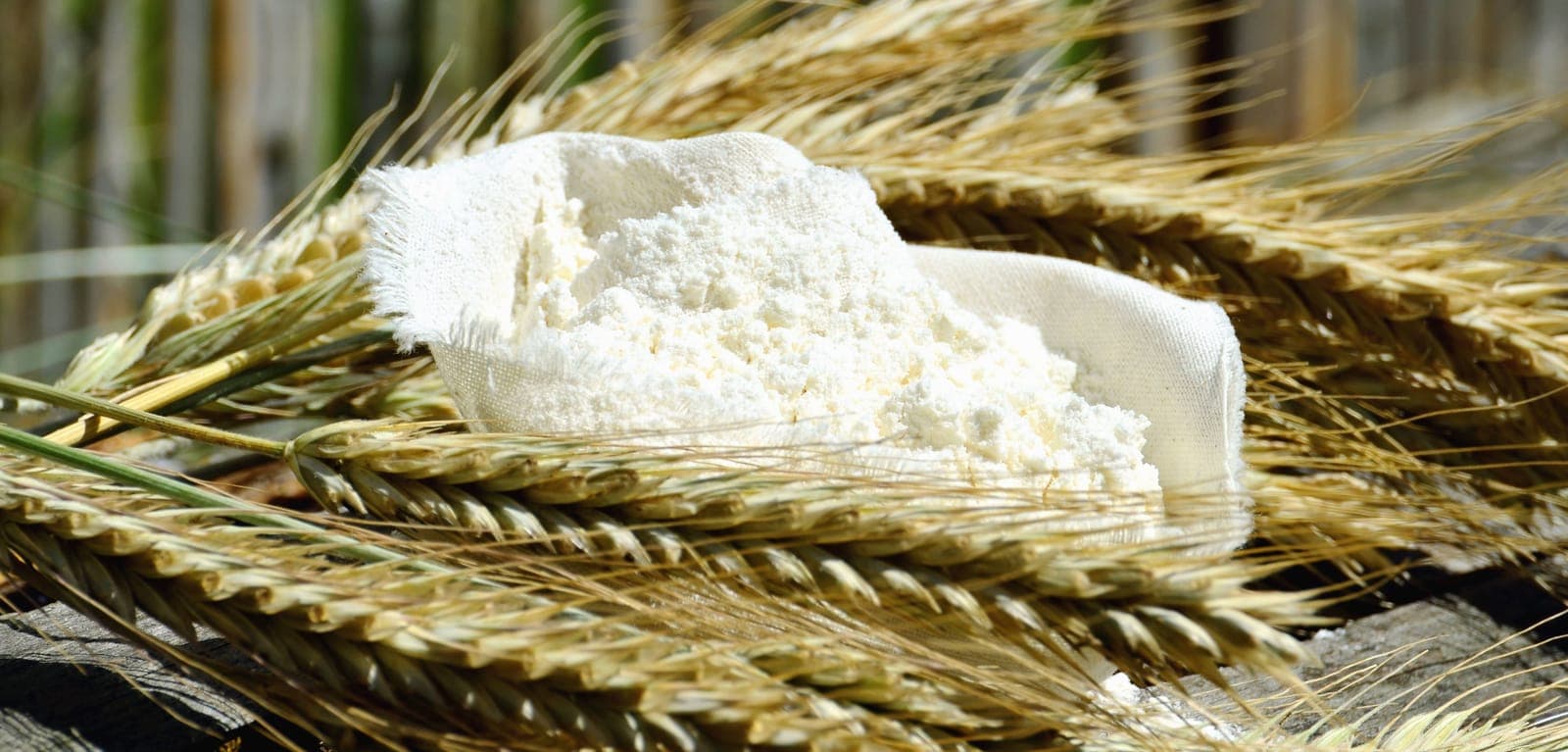
Usually yes, with a texture cost, and the cost lands differently depending on what you are making. What a flour can build is a gluten network, and how much of it the dough can build is what a swap changes, so the swap is safest wherever that network was never the point.
Start with what protein does once water arrives.
Gluten forms when the wheat proteins glutenin and gliadin hydrate and link into an elastic network.1
The more of those proteins a flour brings, the more raw material that network has. Nothing forms until hydration, which is why flour sitting in a jar is not yet anything.
Two proteins, two different jobs
The name gluten covers a partnership rather than one substance, and the two halves pull in different directions on purpose.
In noodle dough, hydrated glutenin forms a polymeric protein network that gives the dough cohesiveness and elasticity, while gliadins act as plasticizers of that network, contributing viscosity and extensibility, so hand-pulled lamian can be stretched repeatedly without tearing.2
One provides the spring, the other lets it stretch without tearing. A dough with too much spring fights back when rolled; one with too much stretch has no structure to hold a rise. What a bread flour buys is more of both.
Glutenin subunits polymerize into high-molecular-weight aggregates stabilized by interchain disulfide bonds, and gliadin monomers attach to these polymers through non-covalent forces such as hydrogen bonds, so resting and kneading noodle dough lets these cross-links organize into strands that pull thin.3
So the network is built as much by handling as by choice of bag. That is the lever you still have after the flour is bought, and it is the reason a swap is often recoverable.
Where the swap actually matters
Protein content stops being an abstraction where firmness is the product, and dry pasta is the clearest case.
Durum wheat semolina's protein content is the primary lever of dry pasta quality and the first parameter pasta makers assess, because the gluten it forms governs the cooked pasta's firmness.4
First thing the makers check, ahead of everything else. Anywhere a bite has to hold, protein is doing the holding, and a lower protein flour has less to hold with.
Where it barely matters
Then there is the opposite family, where the whole recipe is arranged to stop gluten from forming in the first place.
Fat tenderizes baked goods by coating flour proteins and limiting gluten formation.5
A shortcrust or a rich cookie is spending effort limiting the network, so starting with a flour that builds less of it changes very little. This is why the same swap is invisible in a pie crust and obvious in a baguette.
Swap on purpose
The differences are big enough to feel in the dough before anything is baked, which makes this a cheap thing to learn by hand.
- Swap one for one by weight rather than by cup, since the two flours do not pack the same way.
- Hold back a little water at first with all-purpose in a bread recipe. Lower protein flour takes up less of it.
- Knead a bit longer to make up some of the difference, and stop when the dough turns smooth rather than at a set time.
- Expect a softer crumb and a little less rise. That is the trade, not a failure.
- Use the swap freely in cakes, cookies, and pastry, where less gluten is the goal anyway.
- If the dough tears when you stretch it, give it a rest rather than more flour. It usually comes back together.
- Bake it, eat it warm, and note which recipes you would rather buy the other bag for.
Sources & facts
- 1. Gluten: glutenin meets gliadin ↩
- 2. Glutenin elasticity, gliadin extensibility in noodles ↩
- 3. Disulfide bonds build the glutenin polymer ↩
- 4. Durum semolina: protein as the quality lever ↩
- 5. Fat keeps baked goods tender ↩
Facts without an external link are drawn from the R&Dish reviewed corpus (textbook-level food science).
TopicEveryday Science