Why Are Ramen Noodles Yellow and Springy? It's the Kansui
why are ramen noodles yellow springy
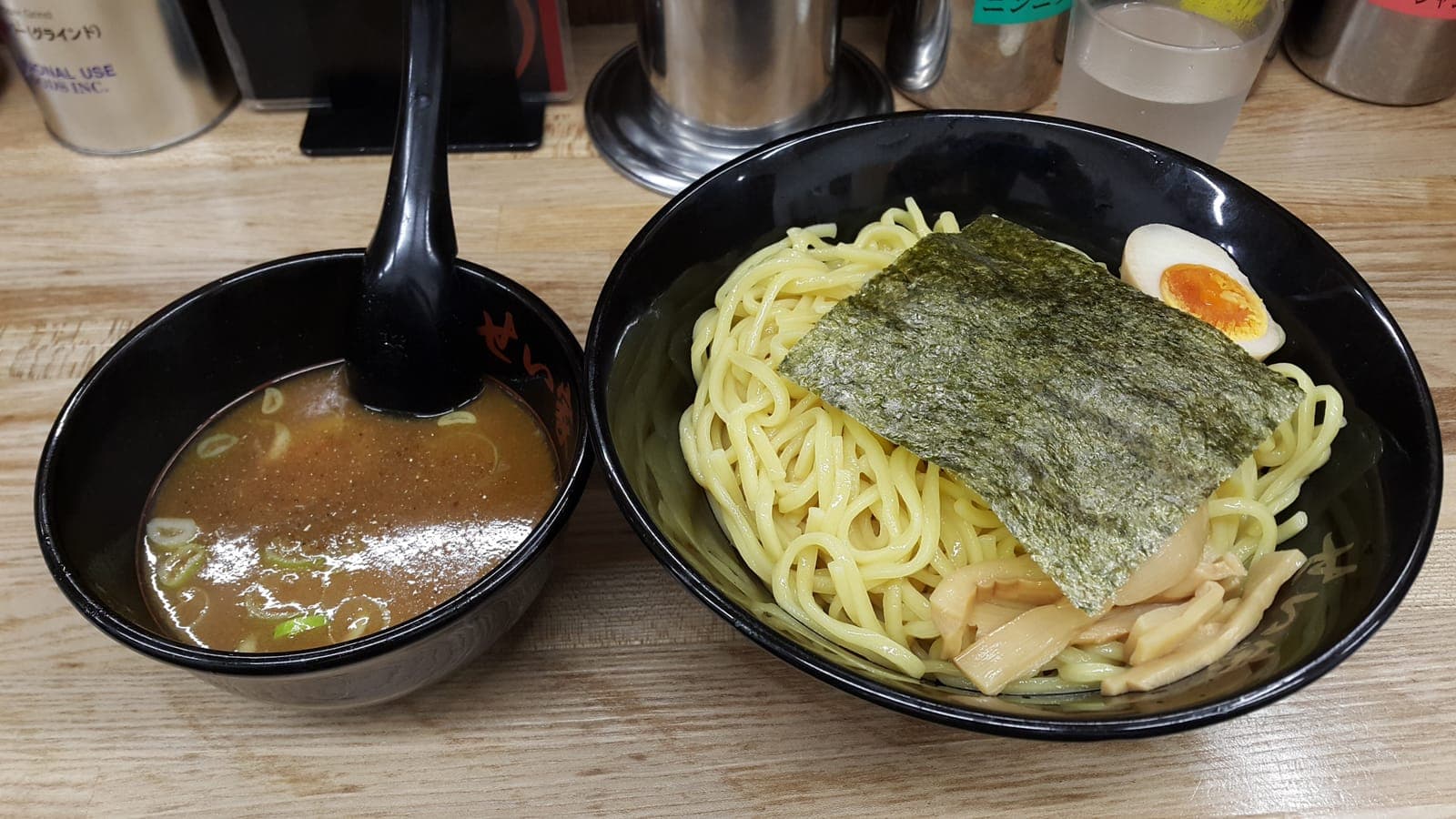
Lift a noodle out of a bowl of ramen and it looks nothing like the pasta in your cupboard: yellower, springier, with a bite that pushes back against your teeth. Nobody added a dye, and nobody added a texturizer. So where do both of those come from?
One ingredient sets ramen apart
Not the flour, not the shape, not even the pot it boils in. What separates a ramen noodle from any other wheat noodle is a single salt stirred into the dough water.
Ramen noodles are made alkaline with kansui, sodium carbonate or potassium carbonate or a mixture of the two, which distinguishes them from ordinary wheat noodles made with salt alone.1
What that alkalinity actually takes hold of is not the flour grain itself, but the protein web that starts knitting together the moment water hits it.
Gluten forms when the wheat proteins glutenin and gliadin hydrate and link into an elastic network.2
Where the springy bite comes from
Push the pH of that web up with kansui and the proteins find far more places to grab each other, pulling into something water and salt alone never manage.
The alkalinity of kansui raises the dough's pH and promotes cross-linking of wheat gluten proteins through thiol and disulfide exchange, strengthening disulfide and non-disulfide bonds and drawing additional glutenin polymer into a denser, tighter, more rigid network. This gives ramen and hand-pulled lamian their characteristic firm, springy, chewy bite along with a distinctive color and flavor.3
So the chew you feel is not flavor at all. It is a tighter web getting squashed by your teeth and shoving straight back. The color is a separate story.
Why the noodles turn yellow
Yellow noodles look like somebody tinted them, which is a fair guess and still the wrong one. The flour is doing it to itself, under the same alkaline conditions.
The characteristic yellow color of alkaline wheat noodles arises because flavone pigments naturally present in the flour, colorless near neutral pH, are released and shift to a yellow form in the high-pH alkaline dough, without any added dye.4
The color was sitting in the flour the whole time, waiting for a high enough pH to come out. Both signatures, the springy bite and the yellow, trace back to that one alkaline step.
- Dissolve the kansui, sodium or potassium carbonate, into the dough water first, since that alkalinity is what turns ordinary wheat noodles into ramen.
- If you cannot find kansui, you are not stuck: baked baking soda is the common home substitute for the carbonate, dissolved into the water before the flour goes in.
- Do not worry when the dough comes out firmer and springier and fights the rolling pin more than a plain one; that is the sign the gluten has cross-linked.
- Knead and rest the dough to develop the network fully, since the alkaline crosslinking builds on the glutenin and gliadin already there.
- Do not reach for food coloring to chase the yellow; the alkaline dough develops it on its own from the flour's flavones.
- Adjust the kansui amount to taste, since it is the single lever behind both the color and the springy bite, and one chewy mouthful tells you which way your own preference runs.
Sources & facts
- 1. Kansui: the alkaline salt that defines ramen ↩
- 2. Gluten: glutenin meets gliadin ↩
- 3. Kansui and gluten: the chemistry of chewy noodles ↩
- 4. Alkaline noodles turn yellow from flavones ↩
Facts without an external link are drawn from the R&Dish reviewed corpus (textbook-level food science).
TopicEveryday Science