What Can Replace Mirin? Sugar Is Only Half of It
what can I use instead of mirin
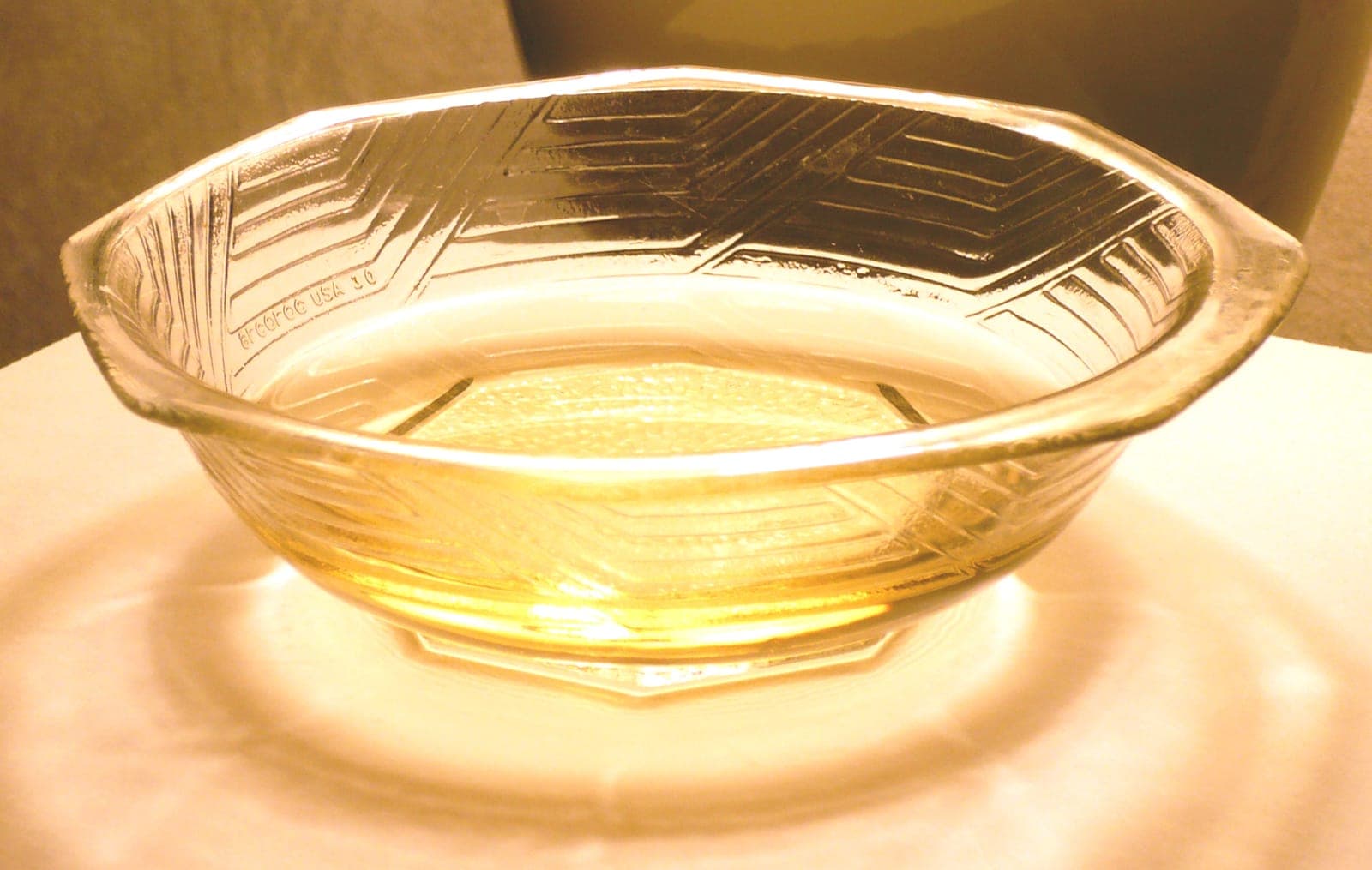
Sugar plus sake is the usual answer and it covers the sweetness, but it does not reproduce what mirin is made of. Mirin's sugar arrives from koji working on rice, which leaves a mixture rather than one sugar, and the alcohol it brings does not simply vanish in the pan.
Where the sweetness comes from
Mirin and amazake are both koji products, and the sweetness in both is made rather than added.
In koji fermentation the alpha-amylase and glucoamylase secreted by Aspergillus oryzae hydrolyze rice starch into glucose, which is the chemical basis of amazake's sweetness and the fermentable sugar supply in sake brewing.1
Starch goes in and glucose comes out, without a spoon of sugar anywhere. That already separates mirin from a sugar syrup, and there is a second step that separates it further.
Beyond producing glucose, the alpha-glucosidase of Aspergillus oryzae carries out transglycosylation, building branched oligosaccharides such as isomaltose from maltose, which is why koji-saccharified products like mirin and amazake contain a complex mixture of glucose plus di- and oligosaccharides rather than glucose alone.2
So a koji-saccharified product carries a mixture of sugar sizes rather than one sugar on its own. That is the part a spoon of table sugar cannot copy, and it is worth knowing that is what you are giving up rather than pretending the swap is free.
The alcohol does not all burn off
This is the assumption most substitution advice quietly rests on, and it does not hold up.
When mirin, sake, or other alcohol is added to a dish, a substantial fraction of the ethanol survives cooking, and the amount retained depends on method and time rather than fully burning off: roughly 85 percent when stirred into a hot liquid, about 40 percent after 15 minutes of simmering or baking, about 25 percent at one hour, about 10 percent at two hours, and about 5 percent at two and a half hours.3
Stirred into something hot and left there, most of it stays. Fifteen minutes of simmering still leaves a substantial fraction. So if you are avoiding alcohol, swapping mirin for sake plus sugar changes nothing about that, and the substitution that matters is a non-alcoholic one.
Reading the ratios
Before adjusting anything it helps to see what the standard proportions are, since mirin sits in them as a fixed share.
Japan's Ministry of Agriculture, Forestry and Fisheries gives seasoning ratios for simmered Japanese dishes as 8 parts dashi to 1 part soy sauce to 1 part mirin for nimono, 6 parts sake to 1 soy sauce to 1 mirin for simmered fish, and 12 parts dashi to 1 soy sauce to 1 mirin for a noodle broth, and presents these as base proportions to be adjusted for household and preference.4
Mirin and soy sauce enter in equal parts across all three, which makes the substitution arithmetic simple: whatever you replace mirin with goes in at that same share, and the ratios themselves are presented as a base to adjust rather than a law.
What each swap keeps
None of these is a full replacement, so the useful question is which property you need in that particular dish. Glaze needs sugar; a braise needs less.
- Sake plus sugar: closest on sweetness and alcohol, missing the koji sugar mixture. Start at the same volume mirin would have taken.
- Sugar in water, no alcohol: fine when the dish is only using mirin for sweetness and shine.
- Amazake: also a koji product, so the sugar mixture is closer, but it is thicker and less sweet by volume. Expect to adjust.
- Dry white wine plus sugar: workable, but it brings its own acidity, so taste before adding vinegar elsewhere in the dish.
- If the result tastes flat rather than wrong, it is usually short on sugar rather than short on mirin. Add a little and taste again.
- Cook the dish you were going to cook, and judge the swap on that plate rather than on the spoon.
Sources & facts
- 1. Koji amylase: how amazake gets its sweetness ↩
- 2. Koji oligosaccharides: mirin's layered sweetness ↩
- 3. Cooking with alcohol: how much really cooks off ↩
- 4. Nimono runs eight parts dashi to one soy ↩
Facts without an external link are drawn from the R&Dish reviewed corpus (textbook-level food science).
TopicEveryday Science