How to Stop Apples Turning Brown, and Why Lemon and Blanching Work
how to stop apples turning brown
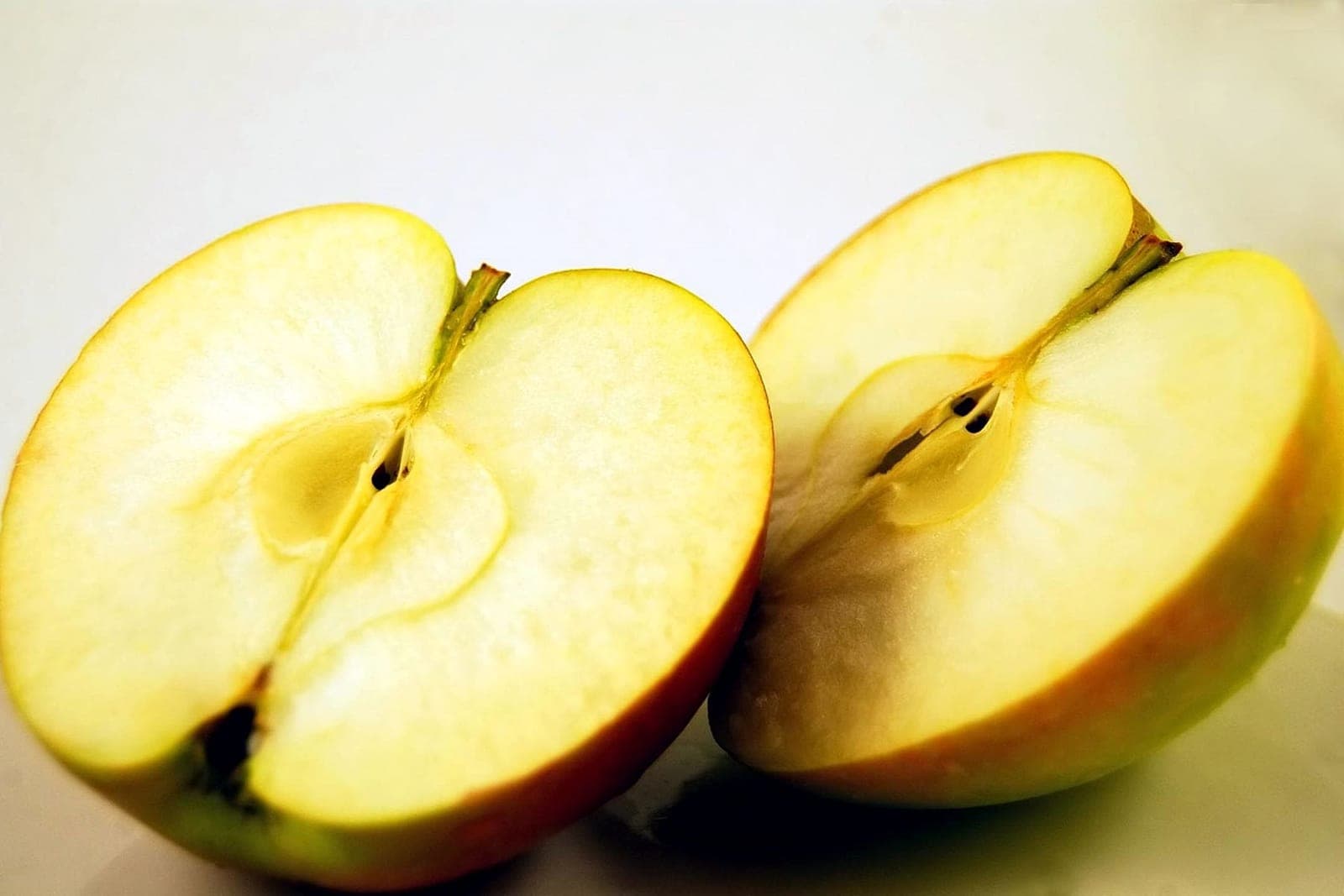
Slice an apple for a lunchbox in the morning and by the time the lid comes off the cut faces have gone rusty brown. It still tastes fine; it just looks tired. The same thing happens to a cut potato or a sliced pear, and the two moves everyone reaches for to stop apples turning brown, a squeeze of lemon juice and a brief dip in boiling water, look nothing alike. Why do both of them work?
An enzyme meeting the air
The apple is not drying out and it is not spoiling. Something begins the moment a knife opens the fruit up to the air.
Cut apples and potatoes brown because polyphenol oxidase enzymes react phenols with oxygen.1
The reaction needs three things at once, the enzyme, the phenols already in the fruit, and oxygen from the air, which means it also has three places where you can interfere. Take any one of them away and the browning slows or stops. Which one is the lemon juice going after?
Acid such as lemon juice slows enzymatic browning by lowering pH below the enzyme's optimum.2
Lemon juice does not remove the enzyme, it just makes the conditions worse for it, which is how the apple keeps its crunch while the reaction slows down. Heat takes a blunter route.
Blanching vegetables in boiling water deactivates enzymes that would otherwise cause off-flavors and color loss.3
A quick blanch goes at the enzyme itself rather than its surroundings, shutting it down instead of merely slowing it, which is why it lasts longer when a recipe can afford a cooked texture. The trade is that heat softens the fruit, so it suits apples headed for a pie or a sauce more than slices meant to stay crisp. For raw slices the gentler acid route is usually the right one.
Keep the slices pale
The steps below all come back to the same three ingredients the reaction needs, and to taking one of them away. Spotting which one makes the choice easy.
- Toss cut apples with a little lemon or other citrus juice so the surfaces turn acidic.
- Drop slices into a bowl of water, which limits their contact with the air while they wait.
- Add a small squeeze of lemon to that water for both effects at once.
- For a longer hold, blanch the pieces briefly in boiling water, then cool them, accepting the softer texture that comes with it. In a pie or a sauce you will never miss the crunch.
- Cut apples as close to serving as you can, since the reaction starts the instant the surface is exposed, so breaking the habit of prepping early does most of the work for you.
- Press plastic wrap directly onto the cut surface of a halved apple to keep the air off it. That alone leaves the cut face far cleaner when you come back to it.
Sources & facts
Facts without an external link are drawn from the R&Dish reviewed corpus (textbook-level food science).
TopicEveryday Science