How to Keep Vegetables Green When Blanching, and Why the Ice Water Matters
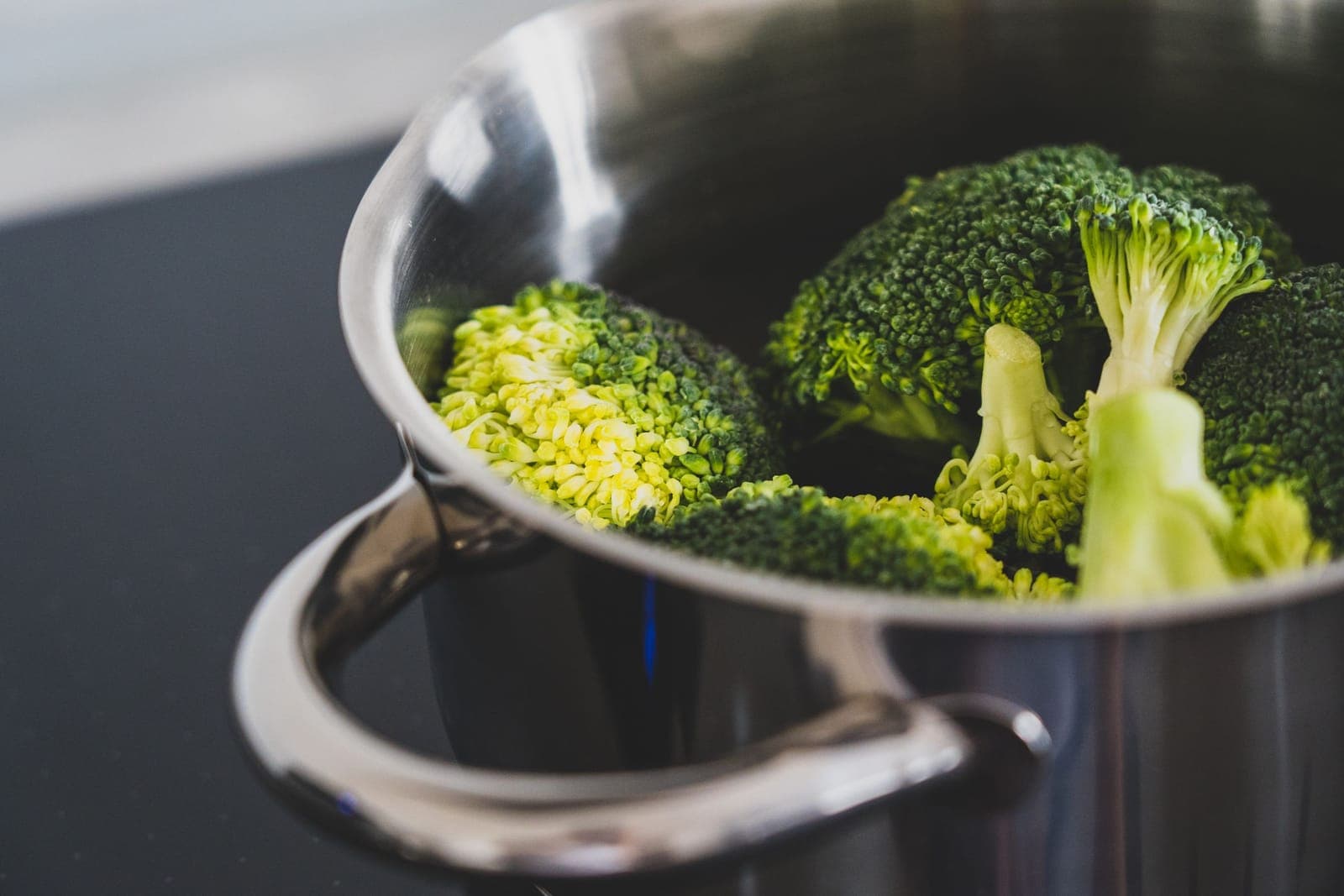
Restaurant green beans and blanched broccoli come out an almost neon green, while the same vegetables boiled a few minutes too long at home go a sad army color. Same pot, same vegetable, so what is different? To keep vegetables green when blanching the move is a fast dip in boiling water followed straight away by ice water, and neither half of that is decoration.
Why green turns drab
The bright green of a raw bean is a pigment, and a pigment is ultimately a molecule that can be changed. What happens to that molecule in the pot?
Green vegetables turn drab olive when acids released during cooking convert chlorophyll to pheophytin.1
The longer a vegetable sits in the heat, the more of those acids it releases and the more of its bright chlorophyll turns to dull olive pheophytin. The strategy falls out of that. Cook it briefly, and stop it fast.
The ice bath is not optional
Lifting a vegetable out of boiling water does not stop it cooking, since the inside is still hot and the heat carries on with what it was doing. Something else has to do the stopping.
Shocking blanched vegetables in ice water halts cooking and sets their bright green color.2
So the ice bath does two things at once, keeping the residual heat from pushing that pigment change any further and locking in the color you already have. Skip it and the vegetable keeps cooking in its own warmth on the way to the plate, quietly undoing the bright color you just worked to protect. The brief heat is also doing something useful under the surface.
Blanching vegetables in boiling water deactivates enzymes that would otherwise cause off-flavors and color loss.3
That is why blanching is a step before freezing greens and not only before serving them, since the brief heat shuts down the enzymes that would otherwise dull color and flavor over time. Bright color and a longer hold come out of the same quick plunge.
A bowl of ice water beside the pot
The steps below all serve the same two goals. Keep the time in the heat short, and stop the cooking cold the moment it is up.
- Bring a large pot of water to a rolling boil before the vegetables go in, so it recovers heat quickly and the dip stays short.
- Have a bowl of ice water ready beside the pot before you start, because making it later is already too late.
- Blanch in small batches so the water stays hot and each piece cooks briefly.
- Pull the vegetables the moment they turn bright green and just tender, not a minute later. Your eyes are more accurate than the timer here.
- Plunge them straight into the ice water to stop the cooking and set the color.
- Drain and dry them once cooled, since sitting in water washes out flavor.
- Blanch and shock greens before freezing them, to protect their color and flavor in the freezer. Pull a handful out later and that green is still on the plate.
Sources & facts
Facts without an external link are drawn from the R&Dish reviewed corpus (textbook-level food science).
TopicEveryday Science