Best Oil for Frying: What Smoke Point Actually Tells You
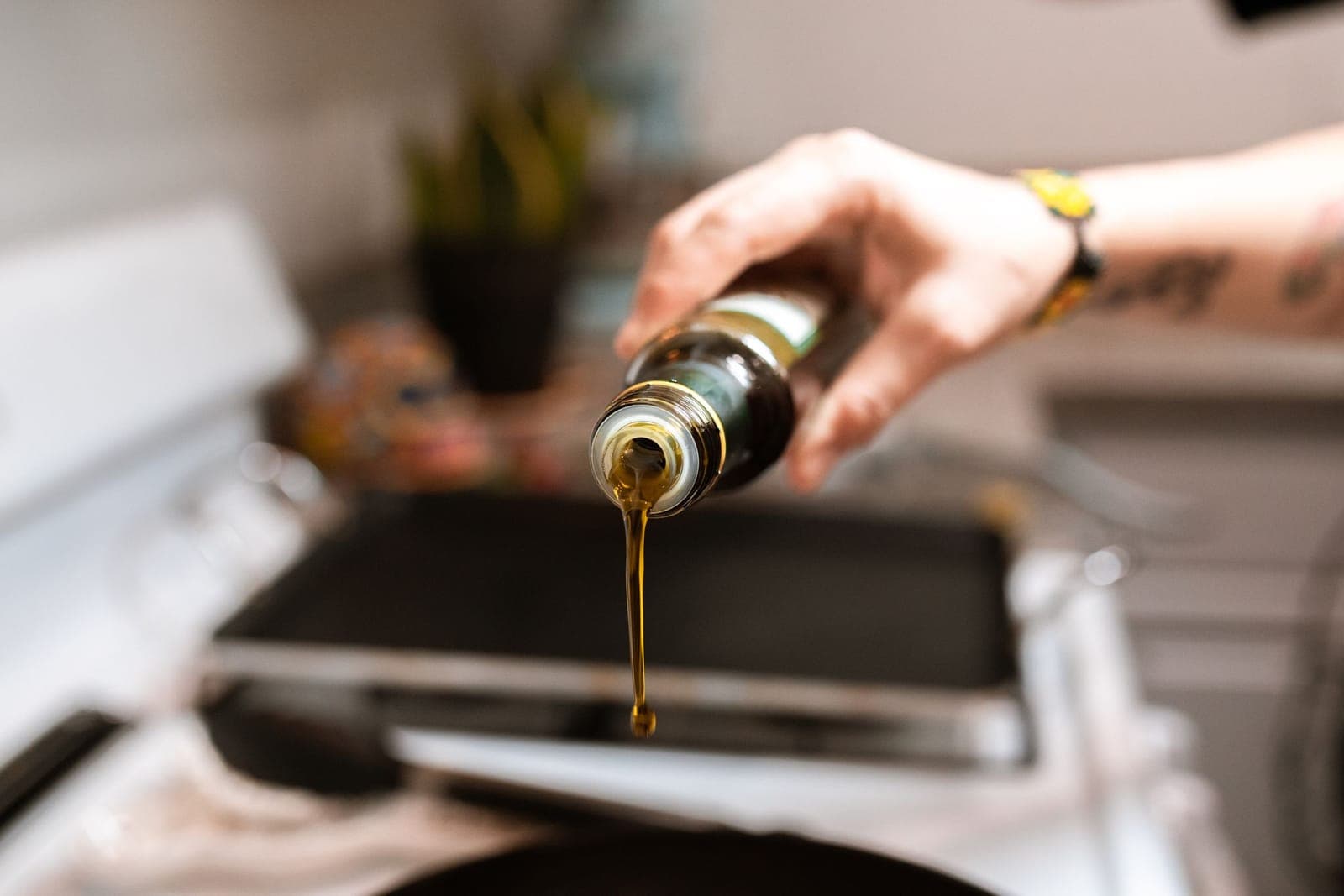
Everybody checks the smoke point first, and for high-heat frying that instinct is right: refined oils with a high smoke point (think refined peanut, canola, or vegetable oil) hold up better than unrefined, cold-pressed oils, which break down and smoke at much lower temperatures. But smoke point is only half the story. How long an oil lasts in the bottle runs on something else entirely, and getting both halves right is what makes a bottle earn its keep at the stove and on the shelf.
What smoke point is measuring
So what is that number on the bottle actually measuring?
An oil's smoke point is the temperature at which it begins to break down and release visible smoke.1
Once oil crosses that line it is not merely cosmetically off; it is chemically breaking down and throwing off compounds that taste burnt and acrid. Matching an oil's smoke point to the heat you are about to use comes first.
Refined oils have higher smoke points than unrefined oils because impurities and free fatty acids are removed.2
Refining strips out exactly the compounds that would otherwise start breaking down early, which is why refined oils take the deep fryer and unrefined, extra-virgin oils stay over near the finishing drizzles.
The other clock: how fast oil goes bad on the shelf
What smoke point tells you stops at the stove. It says nothing about how long the same bottle lasts in the pantry, and that one comes down to fat structure rather than refining.
Polyunsaturated fats oxidize faster than saturated fats because their multiple double bonds are vulnerable to oxygen.3
So an oil can have a perfectly high smoke point and still turn rancid on the shelf faster than a more saturated oil, because the two properties are governed by different chemistry.
Oxidative rancidity produces off-flavors as unsaturated fats react with oxygen to form aldehydes and other compounds.4
That stale, faintly paint-like smell that hits you when you open an old bottle is exactly the signal, and once it sets in, no amount of heat brings the oil back. By then the only fix is a fresh bottle.
Choose and store frying oil
There are two clocks to run, then: pick for the heat, then store for the shelf life.
- Match the oil to the job: choose a refined, high-smoke-point oil for deep frying or searing, and save unrefined or extra-virgin oils for lower-heat cooking or finishing.
- Check a bottle's label or a reference chart for its smoke point before committing it to a hot pan.
- Store oil in a cool, dark place, away from the stove's heat and direct light, both of which speed oxidation.
- Keep the bottle tightly sealed between uses to limit its exposure to oxygen.
- Buy oil in a size you will use up within a few months, rather than a large bottle that sits half-full for a year; if you already have the big bottle, a cool dark shelf goes a long way.
- Smell the oil before using it; a sharp, stale, or crayon-like odor means it has gone rancid and should be replaced, regardless of the expiration date.
Sources & facts
- 1. Smoke point: where oil starts breaking down ↩
- 2. Refining raises the smoke point ↩
- 3. Double bonds invite oxidation ↩
- 4. Rancidity: fat meets oxygen ↩
Facts without an external link are drawn from the R&Dish reviewed corpus (textbook-level food science).
TopicEveryday Science