Why Does Bread Go Stale Faster in the Fridge?
why does bread go stale faster in fridge
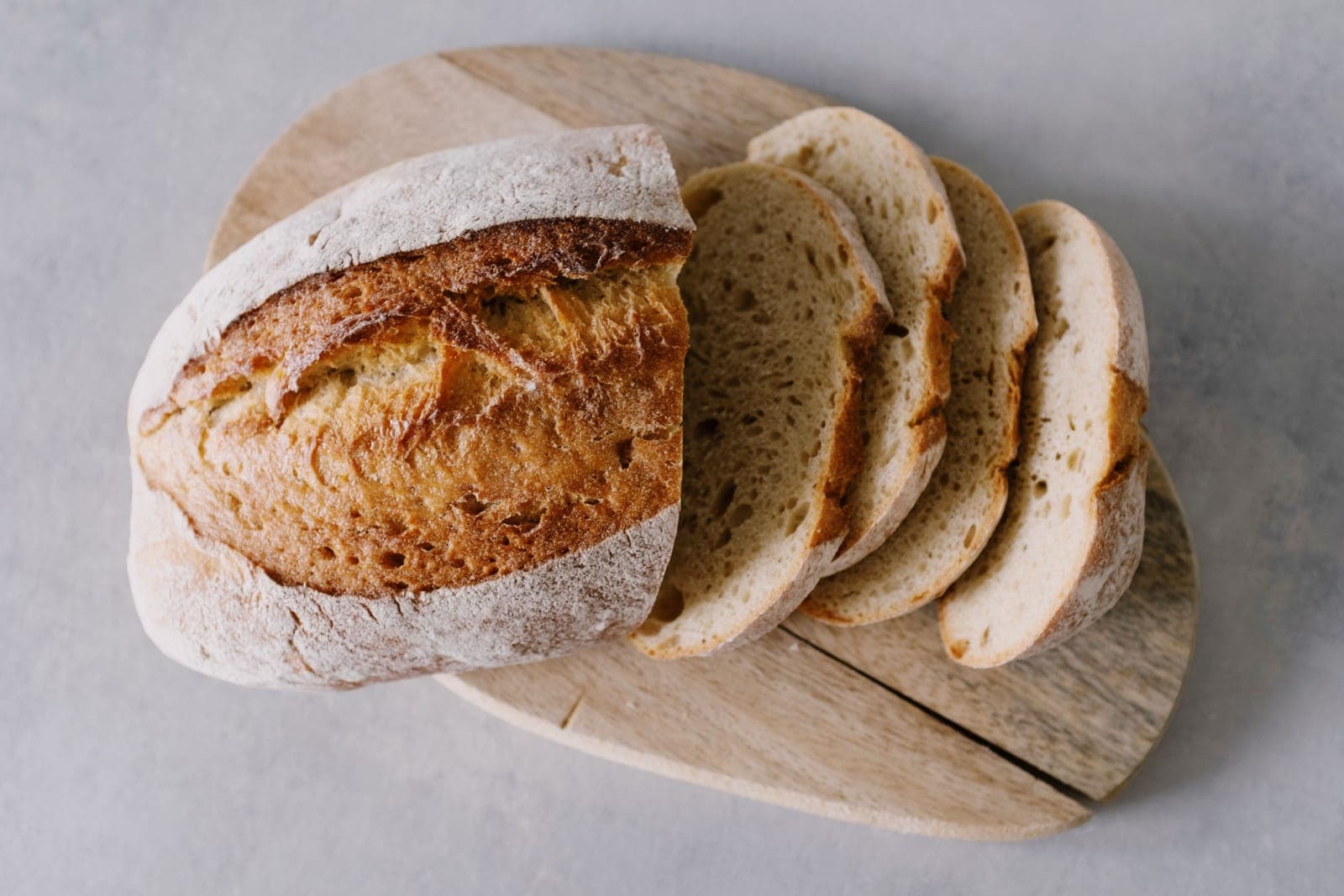
You may have noticed that a loaf left in the fridge turns firm and dry faster than one kept on the counter, which is why people ask whether bread goes stale faster in the fridge for some reason of its own. Is the bread spoiling? The short answer is that staling is a texture change in the starch rather than the bread simply losing water, so this is a question about crumb, not about a loaf going off.
Staling is not just drying out
It is tempting to assume stale bread is just dry bread, but a loaf can feel firm and cardboardy while still holding plenty of moisture inside. If it has not dried out, then what exactly has gone hard?
Bread stales as its gelatinized starch recrystallizes over time, a process called retrogradation.1
So this is not a sign the bread has gone off; it is the starch slowly rearranging itself into a firmer, more crystalline form. What set that soft crumb in the first place?
Wheat starch gelatinizes and sets a crumb structure as bread bakes, roughly between 60 and 80 degrees Celsius.2
The oven's heat swells and sets that starch into the tender crumb you slice into fresh, and retrogradation is that same starch quietly stepping back toward a firmer arrangement once the loaf has cooled. A wrapped day-old loaf that has lost almost no water firms up anyway, and that stepping back is the reason.
Why sugar keeps bread soft
If staling were only about drying out, sweeter breads would go stale just like plain ones. Brioche does not. The difference is the sugar.
Sugar is hygroscopic, attracting and holding moisture, which keeps baked goods moist.3
An enriched, sweeter loaf like brioche or milk bread holds onto its softness longer than a lean baguette because the sugar keeps moisture in the crumb where it belongs. There is a storage hint in that. What a loaf needs is a crumb kept soft, not to be handled like a perishable leftover.
Where to put the loaf
What the steps below protect is the crumb against staling, which is a texture goal. They are separate from the food-safety rules that govern perishable foods.
- Keep a loaf you will finish within a day or two at room temperature in a paper bag or bread box, which many bakers find keeps the crumb softer than the fridge does.
- Freeze bread you will not eat soon, slicing it first so you can pull out only what you need.
- Wrap bread going into the freezer tightly to keep it from drying out in the cold air.
- Thaw or toast frozen slices straight from the freezer, since gentle reheating softens the crumb again, so a firm loaf is not a lost one.
- Store cut bread cut-side down on the counter to slow moisture loss from the exposed crumb.
- Reach for enriched, sweeter breads when you want a loaf that stays soft on the counter for longer. The next morning it still takes butter and jam without complaint.
Sources & facts
Facts without an external link are drawn from the R&Dish reviewed corpus (textbook-level food science).
TopicSugar & Baking