How to Fix Broken Mayonnaise: Rebuild the Emulsion, Save the Batch
how to fix broken mayonnaise
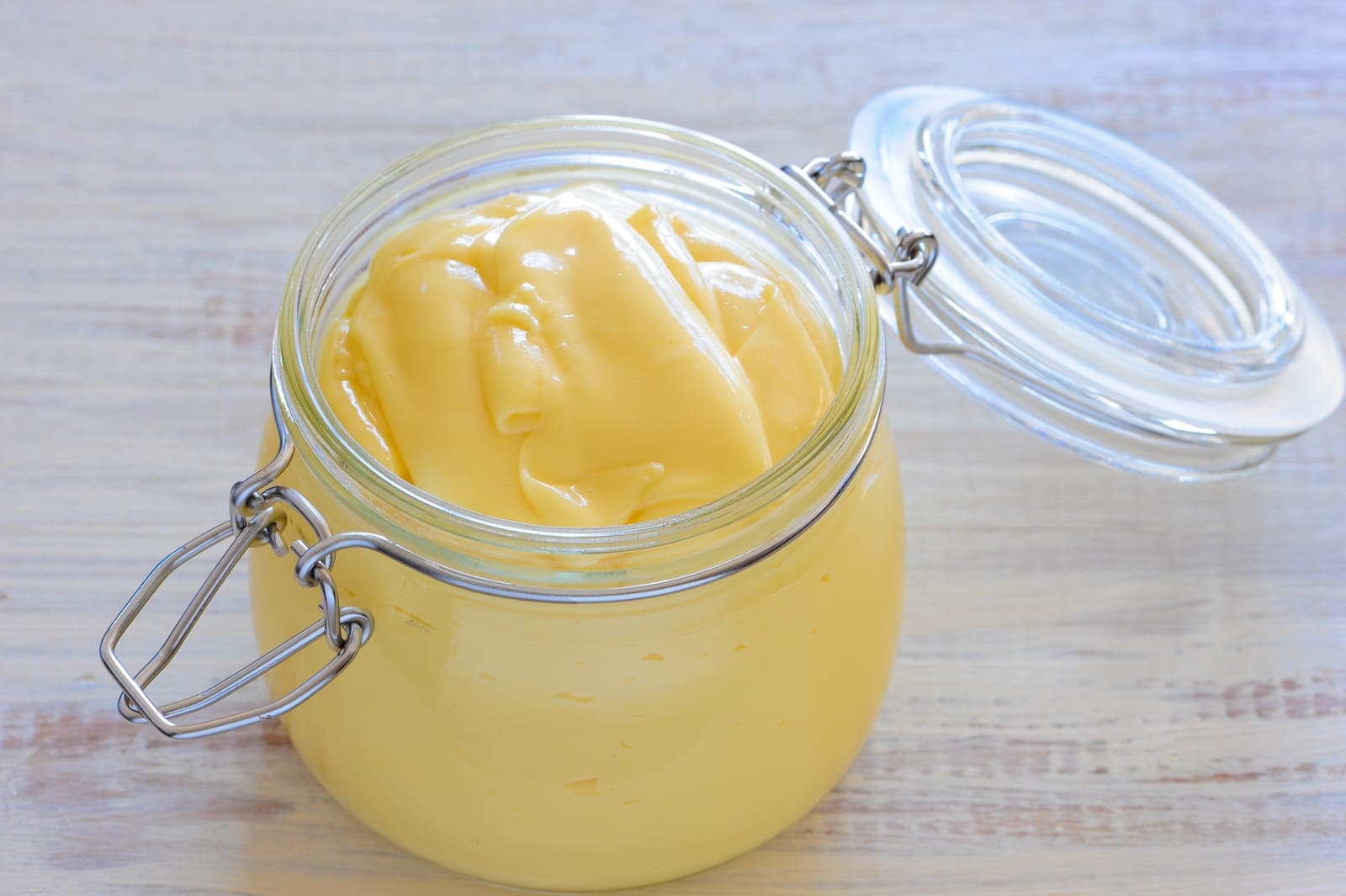
You are whisking, it is coming together, thick and pale and glossy. Then in one wrong second the whole bowl turns greasy and curdled, oil pooling at the edges. It feels like a wasted batch of good oil and eggs. Does it actually have to be?
Mayo was never really a mixture
Oil and water separate on their own. Getting them to stay together takes a specific kind of arrangement.
An emulsion is a stable dispersion of one liquid in another, such as oil droplets suspended in water.1
Mayonnaise is exactly that arrangement, and the thing holding it together comes from the egg.
Mayonnaise is an oil-in-water emulsion stabilized by lecithin and proteins from egg yolk.2
Those molecules from the yolk do quiet, constant work at the border between every oil droplet and the water around it. Whisk in a little oil at a time and each new droplet gets wrapped and kept apart from its neighbors, which is why a good mayonnaise turns thick and pale as it goes.
Emulsifiers like lecithin and egg yolk stabilize emulsions by coating droplets and lowering interfacial tension.3
Why it breaks, and how to reverse it
When mayo breaks, that coating has been overwhelmed and the droplets have run back together. So what overwhelms it?
Emulsions break when droplets coalesce, which excess heat, freezing, or too much dispersed phase can trigger.4
For homemade mayo the usual culprit is that last one: oil poured in faster than the yolk could coat it. So the fix is not to whisk harder. It is to give the oil a fresh surface to grab, and add it slowly this time.
Fix a broken mayonnaise
You do not have to throw the broken batch out. Rebuild the emulsion around a new base, fold the broken one back in a little at a time, and it usually comes back.
- Stop adding oil the instant it looks greasy or curdled; more oil now only drives the droplets further together.
- In a clean bowl, start a fresh base: a fresh egg yolk, or a teaspoon of water or mustard, which also carries emulsifiers.
- Whisk the broken mixture into that base a few drops at a time, letting each bit emulsify before the next goes in.
- Keep the pace slow and steady; rushing the oil is what broke it the first time.
- Bring the eggs and oil to the same room temperature before you start, since mismatched cold ingredients come together less willingly.
- Once it is smooth and thick again, finish any remaining oil in a thin, patient trickle. Nobody will be able to tell it broke.
Sources & facts
- 1. Emulsion: one liquid dispersed in another ↩
- 2. Mayonnaise: oil held in water ↩
- 3. Emulsifiers: what holds droplets apart ↩
- 4. When emulsions break ↩
Facts without an external link are drawn from the R&Dish reviewed corpus (textbook-level food science).
TopicEmulsion & Dairy