Why Cardamom Makes Coffee Taste Better: The Shared-Aroma Science
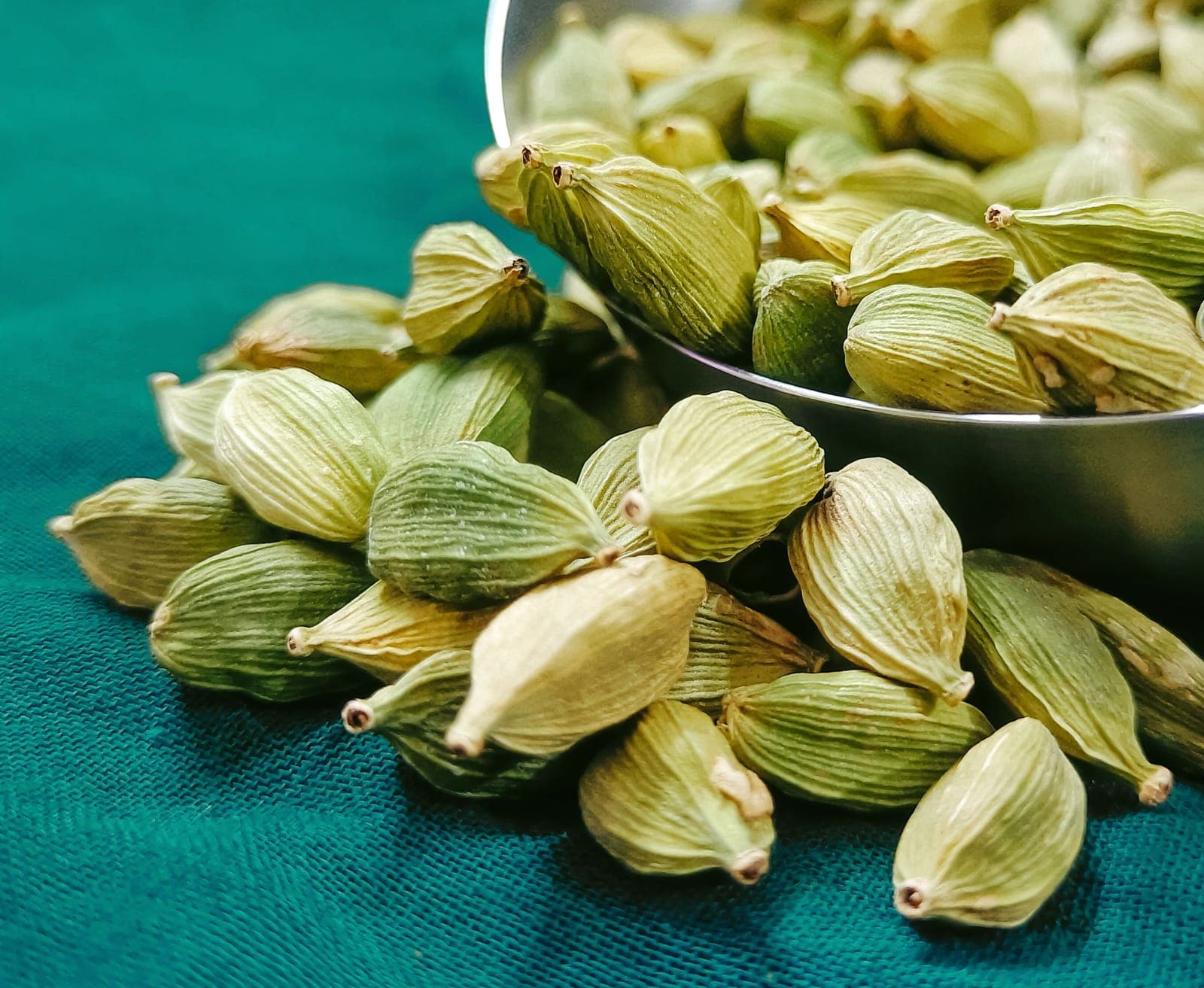
Across the Middle East and the Horn of Africa, coffee has been brewed with a few crushed cardamom pods for centuries, and one whiff of a freshly boiled pot tells you the coffee and the spice are not running on separate tracks. It does not taste added on. Done well it tastes as though it was always meant to be in the cup, rounding the coffee and lifting its aroma at once, so how do two ingredients from opposite ends of the world lock together this cleanly?
The logic of shared aromas
Cooks have long noticed that certain ingredients seem built to go together even when they come from opposite ends of the world. In recent decades that intuition picked up a name and a mechanism.
Foods that share dominant aroma compounds are often said to pair well, a principle used to bridge cuisines.1
In other words, overlap in the aromatic fingerprint is a good predictor of harmony on the palate. Cardamom is unusually aromatic, carrying warm, resinous, faintly citrus notes, and several of them echo compounds already sitting in roasted coffee. That shared vocabulary is what lets the spice read as an extension of the coffee rather than an intruder. Where did the overlap come from in the first place?
What roasting builds in the cup
Put your nose to a green coffee bean and there is almost nothing there. Nearly everything you smell in a finished cup is created in the roaster, in the moment heat drives a cascade of browning reactions through the bean.
Roasting coffee and cacao relies on Maillard and caramelization reactions to build their complex aromas.2
Those reactions throw off hundreds of volatile compounds, the toasty, sweet, and spiced notes that give coffee its depth. Cardamom already shares part of that aromatic range, so adding it pushes up notes the roast laid down instead of pulling against them. The catch is dose. A little cardamom amplifies the coffee while too much flips the balance and hands the spice the lead, which leaves finding your own line to your tongue.
Test it in your own kitchen
The test below holds everything constant except the cardamom, so the difference you taste is the pairing itself and not a change in roast or brew. Keep the doses small at first. You can always add more, but you cannot pull the spice back out.
- Brew a single batch of coffee and divide it into identical portions, so roast, grind, and brew strength stay constant across every sample.
- Lightly crush green cardamom pods to release their oils, then add a measured low dose to one portion, a medium dose to a second, and leave a third portion plain as the control.
- For a timing comparison, prepare a parallel set where cardamom is added during brewing versus stirred in after brewing, since heat and contact time change how much aroma is extracted.
- Steep all samples for the same time at the same temperature, then strain out the cardamom solids so no sample keeps extracting longer than another.
- Taste blind and score each sample for aroma harmony, balance, and any overpowering spice note.
- Select the dose and timing that maximize harmony without masking the coffee's roasted character, then brew that cup again and drink it properly: the coffee should read a little wider without tasting spiced.
Sources & facts
- 1. Pairing by shared aroma · Flavor network and the principles of food pairing ↩
- 2. Roasting builds coffee and cacao aroma ↩
Facts without an external link are drawn from the R&Dish reviewed corpus (textbook-level food science).
TopicPairing & Flavor