Perilla Oil Storage: Why It Goes Rancid and How to Keep the Aroma
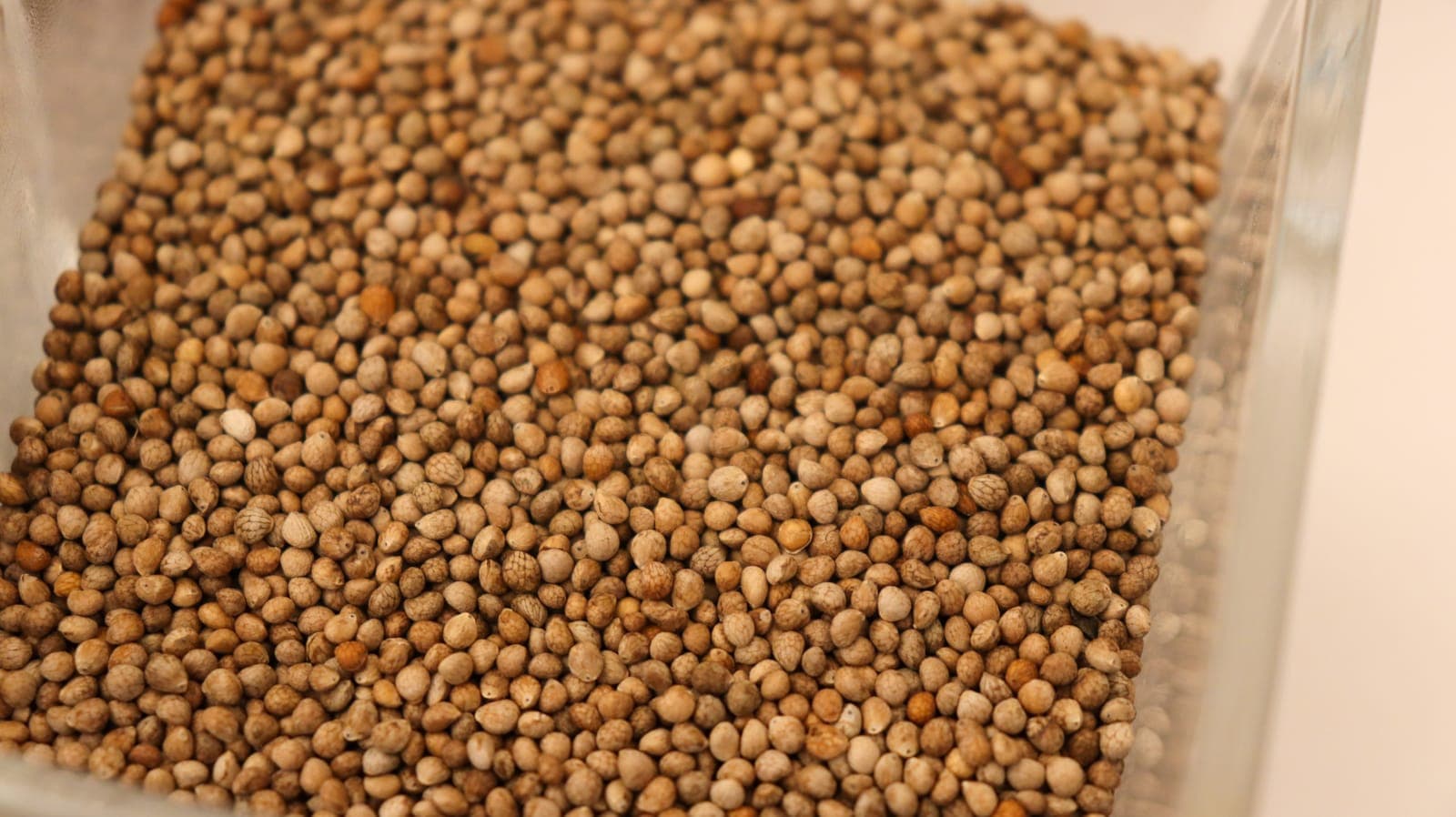
A fresh bottle of perilla oil smells nutty, green, almost toasty, and a tired one smells of nothing much or, worse, of paint. Careful perilla oil storage is not fussiness but a response to the fact that this is one of the most fragile oils on the shelf, going off fast and losing its best quality, that aroma, before anything else. Why is it this delicate?
Why it turns so fast
It starts with the kind of fat perilla oil is made of.
Perilla oil is high in alpha-linolenic acid and oxidizes readily under heat and light.1
Heat and light are what light that reaction, and the vulnerability is not perilla's alone; it follows from the chemistry of the fat itself.
Polyunsaturated fats oxidize faster than saturated fats because their multiple double bonds are vulnerable to oxygen.2
The more double bonds a fat carries, the more places oxygen has to get at it, so saturated fats with fewer of those weak points sit on the shelf comfortably while an oil this rich in fragile bonds cannot afford to. Let that reaction run its course and it leaves a mark on the flavor.
Oxidative rancidity produces off-flavors as unsaturated fats react with oxygen to form aldehydes and other compounds.3
The aroma leaves before the oil is even old
If rancidity is the slow ruin, perilla oil loses its best trait long before it truly turns, because that aroma is volatile and does not survive a hot pan.
Perilla oil's aroma-active compounds are volatile and dissipate quickly once the oil is heated.4
So the toasty, herbal scent that makes the oil worth buying is exactly what high heat drives off first, and that signature perilla character turns out to be most concentrated not in the oil but in the plant's leaf, where a single compound carries much of it.
Perilla leaf owes much of its characteristic aroma to perillaldehyde.5
With perilla the aroma is the whole point and the aroma is fragile, which means most of what a good bottle is worth sits in the smell and whether that smell survives comes down to storage. Protect it the way you would protect the oil from turning.
Store it like the fragile oil it is
Two enemies, oxygen and heat, and both have simple countermeasures. Treat perilla oil like a fresh spice, not a pantry staple.
- Buy perilla oil in small bottles and use it within a few months of opening; unlike a stable oil, it does not keep well once air gets in.
- Store the bottle somewhere cool and dark, away from the stove and the window, since heat and light are what speed the oxidation.
- Keep it refrigerated if you use it slowly; the cold simply slows the reactions that lead to rancid, painty off-flavors.
- Use it off the heat: finish a dish with perilla oil rather than frying in it, so its volatile aroma is not driven off before it reaches the plate.
- Trust your nose over the date: a sharp, paint-like or cardboard smell means the oil has oxidized, and no cooking will bring the fresh aroma back.
Sources & facts
- 1. Perilla oil timing: finding the aroma-safe window ↩
- 2. Double bonds invite oxidation ↩
- 3. Rancidity: fat meets oxygen ↩
- 4. Perilla oil aroma: when heat drives it off ↩
- 5. Perilla leaf: perillaldehyde ↩
Facts without an external link are drawn from the R&Dish reviewed corpus (textbook-level food science).
TopicPairing & Flavor