Why Double Fry Chicken? The Crust Science Behind Karaage and Wings
why double fry chicken wings karaage
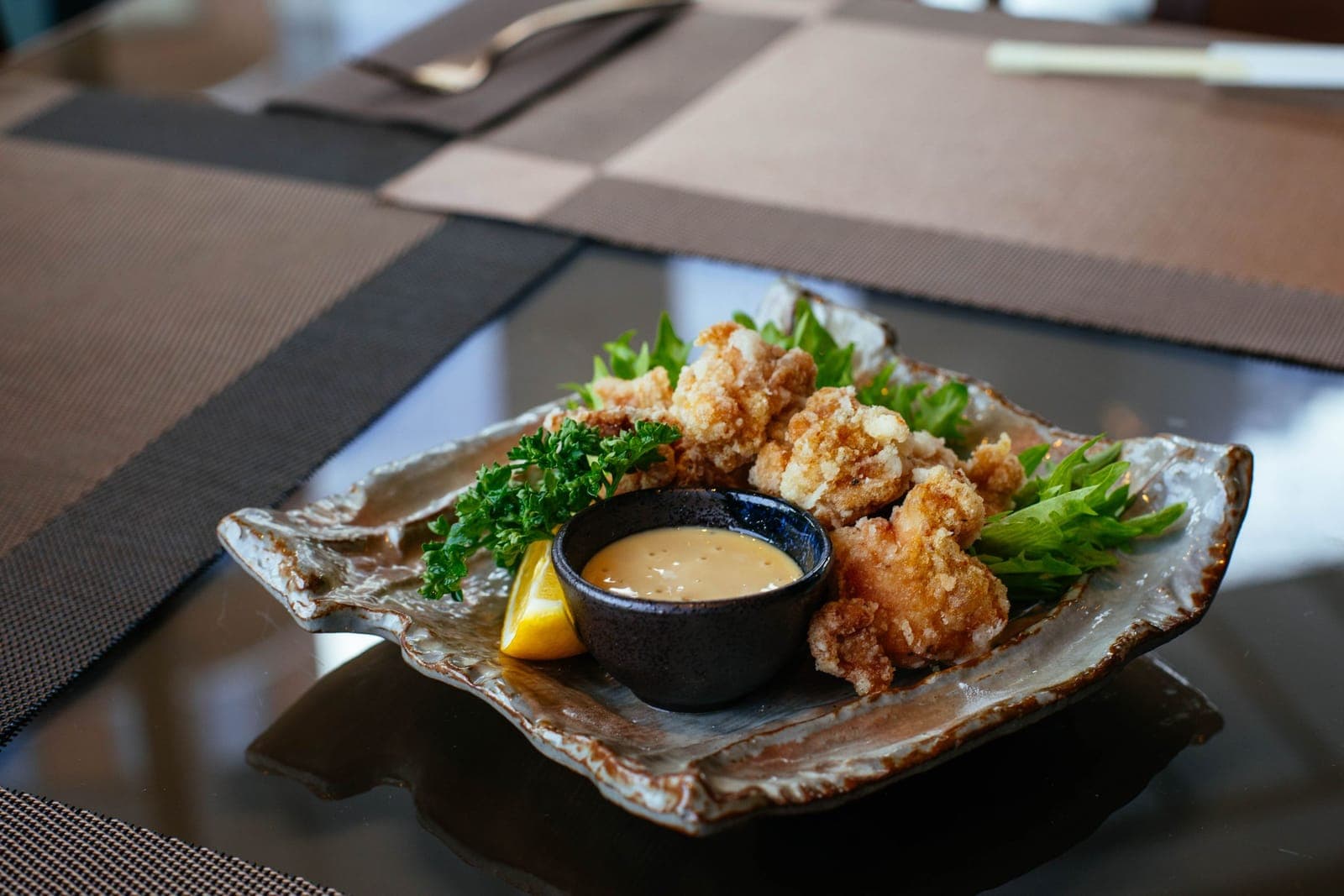
Chicken fried at home tends to go soft somewhere between the pot and the plate, while chicken from a shop is still crisp after you have sat down and talked for a while. Most of the time the difference is that it was double fried. So what does that second pass through the oil actually add?
What frying actually is
Drop something into hot oil and it erupts into noisy bubbles, though hardly anyone stops to ask what those bubbles are made of.
Deep-frying is a coupled heat and mass transfer process in which heat from the oil vaporizes water inside the food, which escapes as the visible bubbling, while oil is absorbed at the same time the moisture leaves.1
The noise is water leaving, and while it goes, something else is quietly happening out at the surface.
In deep frying, water at the food's surface evaporates rapidly and forms a dehydrated crust, and that crust then slows further outward loss of moisture, which is why a first, lower-temperature fry sets the surface before a second fry crisps it.2
Why the second fry runs hotter
Pull a piece out after the first pass and the outside is set but not yet crisp, somewhere awkwardly in between. What changes if the oil goes hotter now?
Raising the frying temperature drives the surface into a harder, less porous crust that inhibits internal moisture loss, which is why the hotter second fry produces a crisper, drier exterior.3
Two temperatures sounds like a fussy ritual, but it is really the same crust being handed two different jobs in order, and the one thing left over is greasiness, which turns on timing rather than heat.
When the oil actually gets in
The natural assumption is that fried food soaks up oil while it is sitting in the oil. Is that really when it happens?
Most oil is not forced into fried food during frying but is drawn in mainly on removal and cooling, when capillary action pulls oil into the crust pores that escaping steam opened up, so oil enters where water left. This uptake pattern was established on model fried products such as potato slices and restructured chips.4
Draining is not the tidying up you do after frying, it is the last step of frying, and where you set the chicken down in the minutes after it leaves the pot decides how greasy it ends up. The busy part comes after the pot.
- Fry the first pass at a moderate temperature to dry and set the crust without rushing the color, then lift the chicken out. Pale is correct at this stage.
- Rest the pieces a few minutes on a rack, not a plate, so steam escapes instead of steaming the crust soft from below.
- Fry the second pass hotter and briefly, just long enough to harden the surface and deepen the color. There is nothing to gain by lingering.
- Drain on a rack the instant the chicken comes out, since the cooling minutes are when capillary action pulls oil into the crust.
- Season immediately, while the surface is hot and slightly tacky. Wait, and the salt and spice slide off onto the plate instead of holding on.
- Serve as soon as you can, since a fried crust is at its crispest straight out of the oil and gives that up as it sits, so let people eat standing up if that is what it takes.
Sources & facts
- 1. Deep-frying: heat out as steam, oil in ↩
- 2. First fry sets a dehydrated crust ↩
- 3. Second fry: hotter oil hardens the crust ↩
- 4. Oil uptake: fried food soaks oil while cooling ↩
Facts without an external link are drawn from the R&Dish reviewed corpus (textbook-level food science).
TopicMeat & Heat