Kiwi Tenderizes Meat Fastest, Pear the Gentlest
which fruit tenderizes meat best pear kiwi pineapple
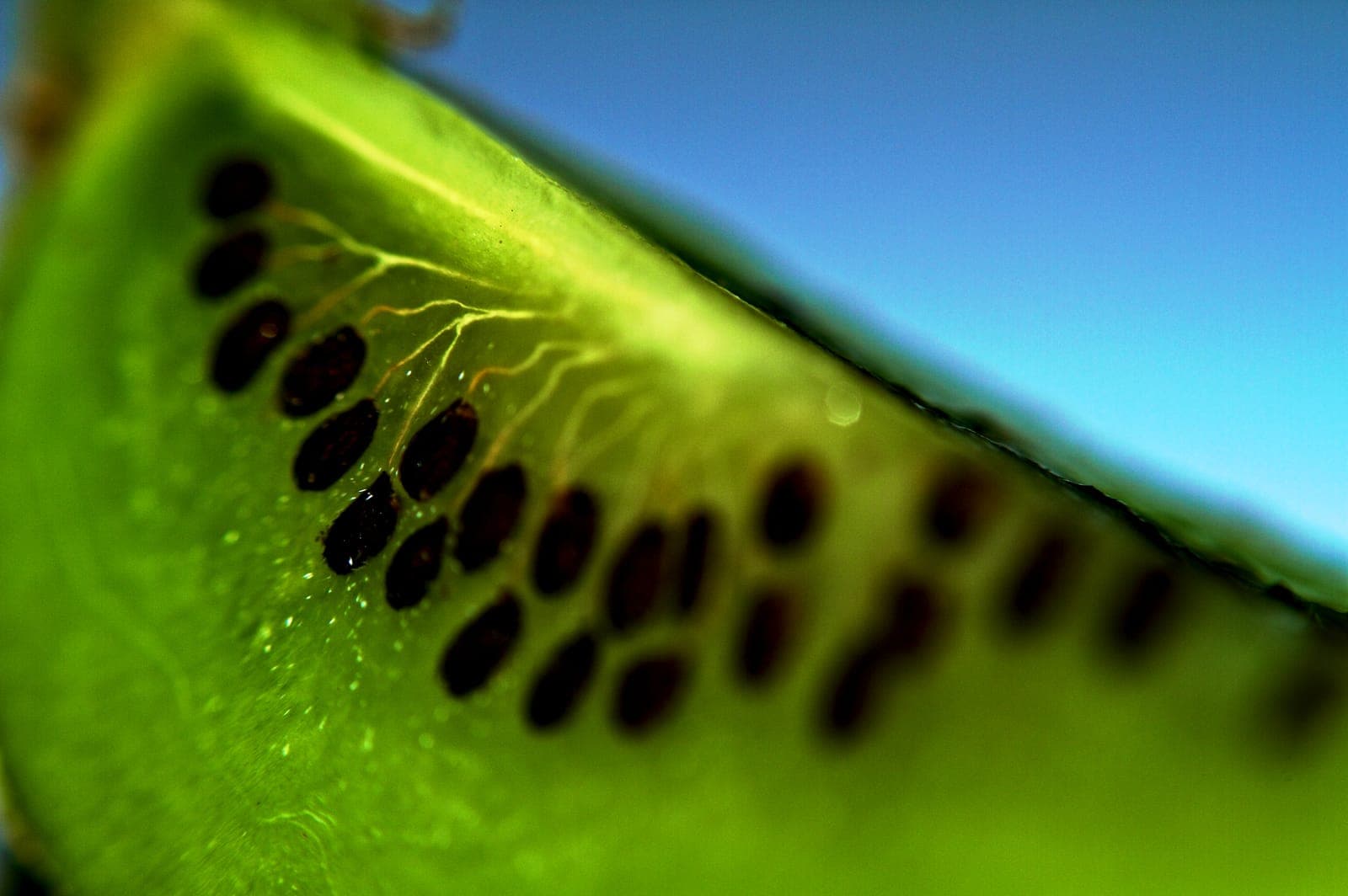
Kiwi is the strongest by a wide margin, pear is much gentler, and that ranking is the whole answer to which fruit to reach for. Strong is not automatically better, because an enzyme that keeps working past the point you wanted turns the surface to mush.
One review put numbers on the comparison, which is rarer than it sounds.
In a comparison reported by a published review, protease extracted from four overmatured fruits ranked kiwifruit highest with 921 units of activity, followed by grape at 225.86 units, then pear at 97.75 units, and apple at 78.29 units, so pear sat well below kiwifruit in that measurement; the same review nonetheless reports pear protease as having been explored as an ideal meat tenderizer precisely because it reaches the desired level of tenderization rather than the overaction that leaves mushy spots with bromelain and actinidin, so a low measured activity and a useful tenderizing role are both on the record.1
Nearly ten times the activity of pear, in the same measurement. That gap is why a kiwi marinade needs a timer and a pear marinade mostly does not.
They do not all attack the same thing
The fruits are not simply weaker and stronger versions of one enzyme. They work on different parts of the muscle.
Actinidin is the major protease of kiwifruit, and a published review's comparison table lists its pH range as 5.0 to 8.0 with an optimal range of 7.0 to 8.5, its temperature as 40 to 60 degrees Celsius, and its principal action site as myofibrillar proteins.2
Kiwi goes after the muscle fibers themselves. Pineapple takes a different route in.
Bromelain is extracted from pineapple, mainly from the stem, and it tenderizes by degrading the myosin light chain and troponin T without affecting actinin, though its broad specificity also causes a mushy texture if the enzymatic action is not properly controlled.3
Worth noting where that comes from: the stem, not the fruit you are eating. And both entries carry the same warning attached to the mechanism itself.
The failure mode is mush, not toughness
This is the part that gets skipped, and it is the part that ruins bulgogi.
Actinidin tends to over-tenderize meat if it is not inactivated, because it keeps initiating hydrolysis of the protein and eventually leaves a mushy and unfavorable texture, and the lower the concentration of enzyme, the lower that tendency.4
The enzyme has no sense of finished. It keeps cutting for as long as conditions let it, so with kiwi the marinating time is not a suggestion but the actual control you have.
Why Korean recipes reach for pear
Grated pear turns up in bulgogi marinades constantly, and the low activity number above turns out to be the reason rather than an accident.
In a published review of plant proteases in meat tenderization, pear fruit cysteine protease is described as having been proposed as a potential alternative to bromelain to overcome the problem of a mushy texture, and as reaching a desired level of tenderization rather than the overaction that leaves mushy spots with bromelain and actinidin.5
A gentle enzyme is forgiving of a marinade that sits an extra hour, which is exactly what a home kitchen needs. Pear brings sweetness and moisture along with it, so it is doing more than one job in that bowl.
Try it with a timer
The differences here are large enough to see in one afternoon, and the enzymes make the mistakes visible rather than subtle.
- Cut one piece of beef into four equal strips so the cut is held constant.
- Make four marinades that are identical apart from the fruit: grated pear, grated kiwi, blended pineapple, and none at all as the control.
- Give all four the same 30 minutes at fridge temperature, then cook them the same way.
- Compare all four against the control, since without it there is nothing to judge against.
- Then run the kiwi one again at 15 minutes and at 2 hours to see how fast it goes too far.
- If a piece comes out pasty on the surface, that is over-tenderizing rather than a bad recipe. Cut the time, not the meat.
- Cook the winner properly, with rice, and stop measuring for the evening.
Sources & facts
- 1. Fruit protease ranking: kiwifruit far above pear ↩
- 2. Actinidin: kiwifruit enzyme for myofibrils ↩
- 3. Bromelain targets myosin light chain ↩
- 4. Actinidin keeps going until you stop it ↩
- 5. Pear protease: the gentle tenderizer proposal ↩
Facts without an external link are drawn from the R&Dish reviewed corpus (textbook-level food science).
TopicMeat & Heat