Sous Vide Pasteurization: The Time and Temperature Behind Safe Low-Heat Cooking
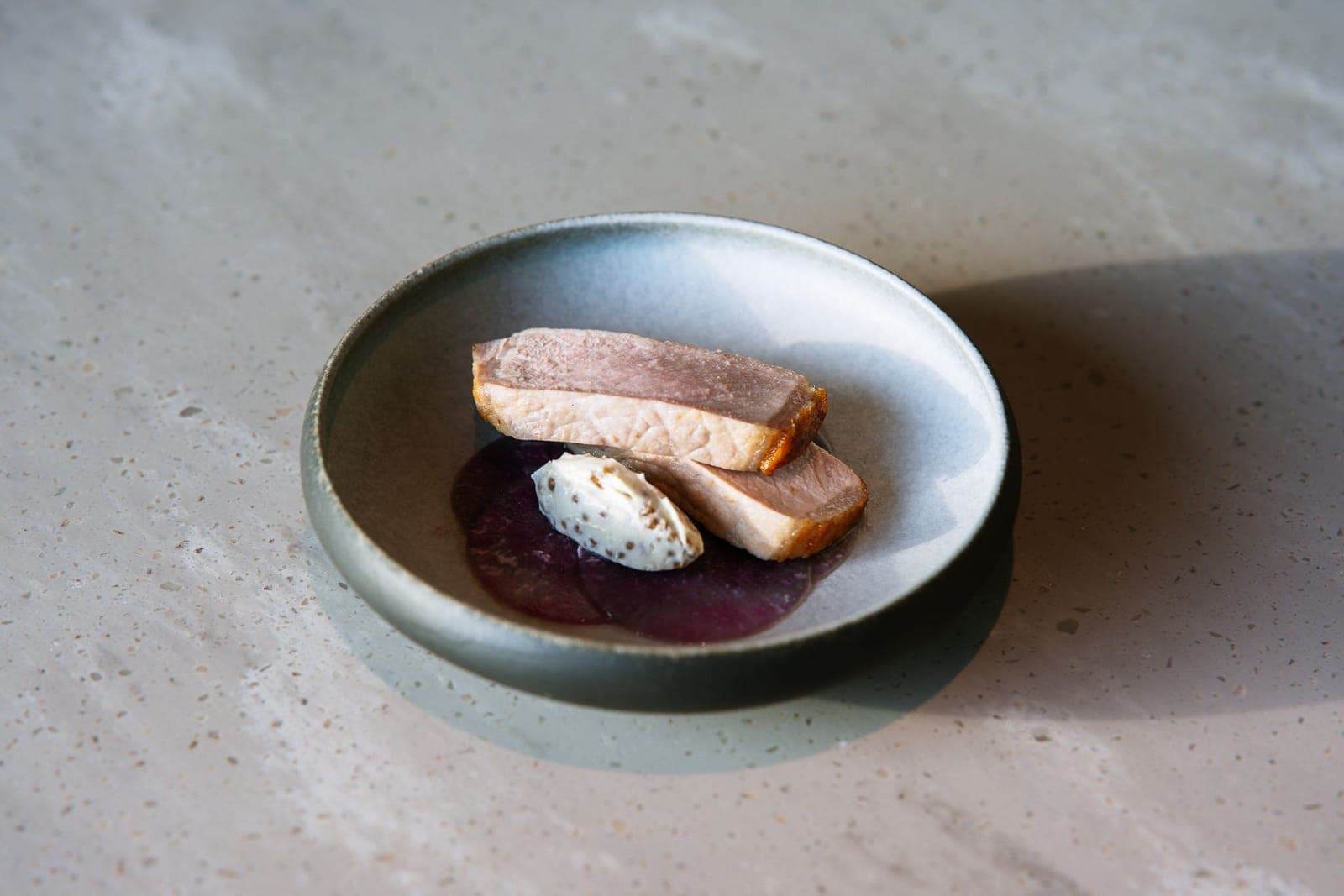
A chicken breast pulled from a sous vide bath at 65 degrees would read as underdone on any grill, and that is what makes people nervous. But low-heat cooking is not guesswork; it reaches the same finish line by a different road. Sous vide pasteurization works because the target is not one searing instant, but a controlled temperature held for a measured time. So how does a low number end up safe?
Pasteurizing is a target, not a temperature
The goal of cooking meat safely is not a magic number but knocking the pathogen population down by a set amount. That amount is a log reduction, and it is stricter for some foods than others.
Sous-vide pasteurization must achieve a 6.5-log10 pathogen reduction for most foods, but poultry requires a stricter 7-log10 reduction, so at the same bath temperature chicken needs a longer hold than beef.1
So the dial is only half the instruction and the other half is how long you hold it, which raises the obvious question: what happens if you run the bath cooler and stretch the time?
In sous-vide cooking a lower temperature held longer is microbiologically equivalent to a higher temperature held briefly, so holding at 63 degrees Celsius for 4 minutes delivers the same lethality as 74 degrees Celsius for 15 seconds.2
That equivalence is what the method banks on, since you are buying the same lethality in minutes rather than degrees, and it is where the low numbers stop looking risky.
Why the hold has two parts
There is a catch: the clock does not start when the bag hits the water. The core has to climb to the bath temperature first, and only then does the pasteurizing time count.
A sous-vide hold time equals the come-up time for the core to reach bath temperature plus the extra time at temperature needed for the log reduction, so a chicken breast targeting 65 degrees Celsius is held for 25 minutes plus 3.2 minutes, or 28.2 minutes in total.3
As the core climbs toward the bath temperature it passes straight through the range where bacteria are happiest, so the come-up is not simply time spent waiting but time that has to go on the clock.
Perishable foods held between 4 and 60 degrees Celsius sit in the danger zone where bacteria multiply rapidly. The 4 to 60 degrees Celsius bounds are the USDA convention, and other authorities draw the band differently, such as the FDA Food Code range of 5 to 57 degrees Celsius.4
So once the core is at temperature, the lethality time is what completes the log reduction; cutting it short gives back the protection the method was built to deliver.
Read the parameters like a cook
Temperature and time are not two values you pick separately but one locked pair, so respect the come-up before you start counting the hold.
- Pick the bath temperature first, then read the matching hold time from a trusted pasteurization table; the two are locked together.
- Give poultry a longer hold than beef at the same temperature, since it is held to a stricter log-reduction target.
- Trade heat for time on purpose: a cooler bath held longer reaches the same lethality as a hotter one held briefly.
- Count the hold as two parts: the come-up for the core to reach the bath, then the extra time that does the pasteurizing.
- Do not start the lethality clock until the core has actually reached the bath, since the come-up climb passes through the range where bacteria multiply.
- Skip none of the hold to shave minutes: pulling it early spends the come-up without banking the lethality the method depends on.
Sources & facts
- 1. Sous-vide pasteurization: the log-reduction standard ↩
- 2. Sous-vide time and temperature equivalence ↩
- 3. Sous-vide hold time: come-up plus lethality ↩
- 4. The 4 to 60C danger zone ↩
Facts without an external link are drawn from the R&Dish reviewed corpus (textbook-level food science).
TopicMeat & Heat