Why Honey-Soy Glaze Works on Almost Anything
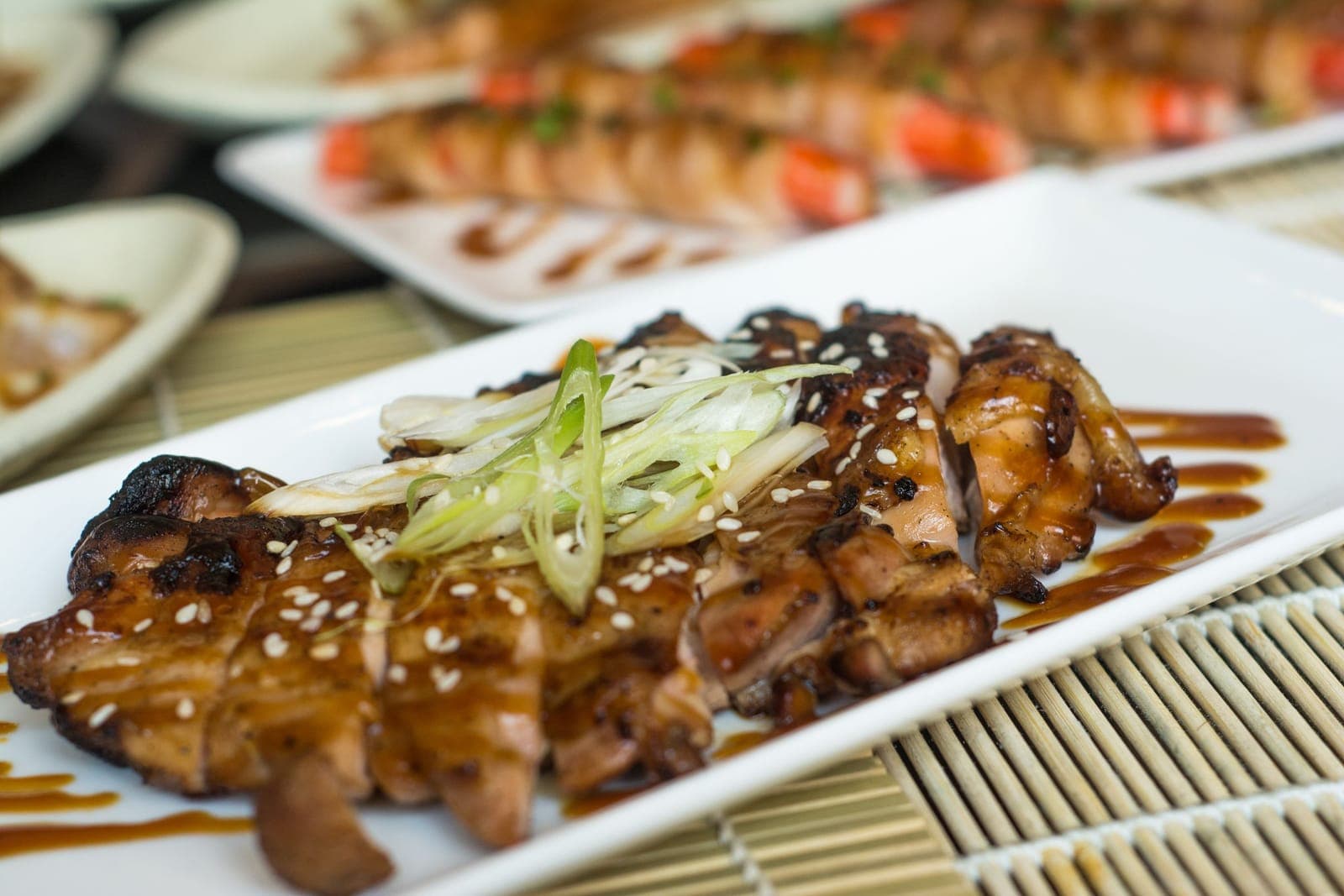
A honey-soy glaze is one of those combinations that works on almost anything: chicken thighs, salmon, a tray of roasted carrots. Two ingredients, a glossy finish, and a savory-sweet depth that tastes more considered than the effort behind it. Two ingredients. So why does it land every single time?
What each side of the glaze brings
Soy sauce is the savory side, and its depth is built slowly rather than added at the end.
Soy sauce develops flavor over months of fermentation in which koji enzymes and salt-tolerant microbes break down soybean and wheat proteins.1
That slow breakdown is what leaves soy sauce loaded with free glutamate and salt, the two things the palate reads as deep, savory umami. Honey plays the opposite role. It is almost pure sugar, held in a state that never quite settles.
Honey is a supersaturated sugar solution and crystallizes over time as glucose separates out.2
That density of sugar is what lets honey round off soy sauce's sharp saline edge. Under heat, it also caramelizes into the lacquered sheen a good glaze is known for.
Why the two balance instead of clashing
A glaze that is only salty, or only sweet, is easy to make and easy to tire of. What makes honey and soy work together is that each one quietly softens the other's rough edges. So what is the salt doing?
Salt suppresses the perception of bitterness and enhances other flavors.3
So the soy sauce is not just seasoning. It lifts the other flavors in the dish while holding back any bitterness the browning might bring. Sweetness then returns the favor.
Sweetness reduces the perceived intensity of astringency and bitterness on the palate.4
Honey's sugar keeps the saltiness and any astringent edge from taking over, which is why a good glaze tastes balanced rather than aggressive. Each ingredient covers the other's weakness, and that is why the pairing forgives a heavy hand.
Find your own ratio
The ratio is a starting point, not a rule. Because the balance is chemical, small changes are predictable: more honey rounds and browns, more soy deepens and salts. Taste as you go and let your own palate set the final point.
- Combine 3 parts soy sauce with 2 parts honey in a small saucepan. Leading with soy keeps the glaze savory and lets the honey round it rather than dominate.
- Warm gently over low heat, stirring, until the honey fully dissolves into the soy sauce.
- Taste and adjust: add honey for more sweetness and gloss, or soy sauce for more salinity and umami.
- Brush onto chicken, salmon, or pork in the last 5 to 10 minutes of cooking so the sugars glaze without burning.
- Watch closely near the end, because the honey's sugars brown fast and can scorch at high heat. Get it right and the surface comes to the table like a mirror.
Sources & facts
- 1. Soy sauce: months of enzymatic breakdown ↩
- 2. Why honey crystallizes ↩
- 3. Salt tames bitterness ↩
- 4. Sweetness softens astringency ↩
Facts without an external link are drawn from the R&Dish reviewed corpus (textbook-level food science).
TopicPairing & Flavor