Mushrooms Love Butter: Do Fat Choice and Dried Mushrooms Matter?
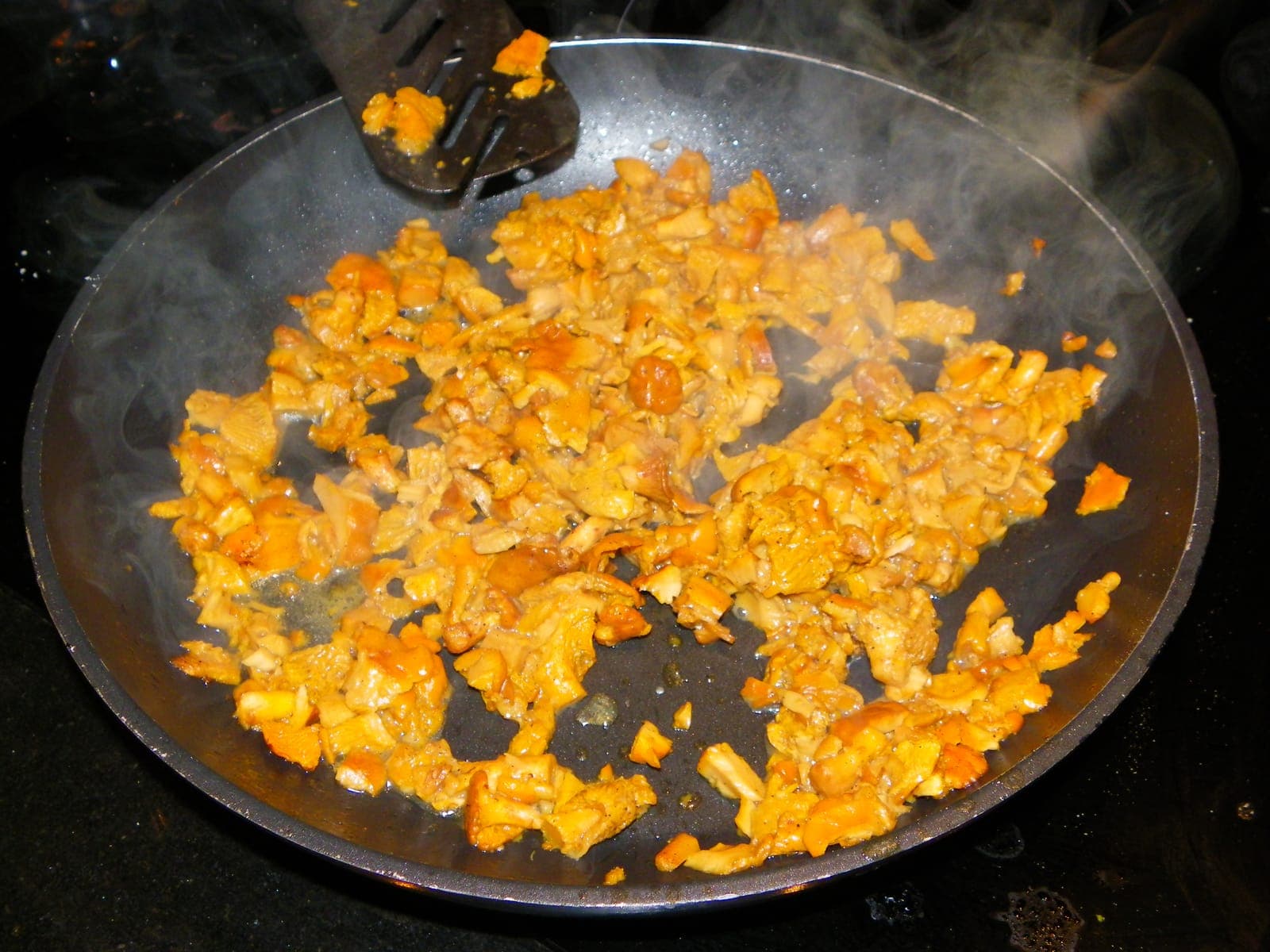
Almost every cook reaches for butter when mushrooms hit the pan, and one whiff of what comes off the pan seems to settle the argument on the spot. Two questions hide inside that habit, though. Does butter actually beat a neutral oil, or does it just feel more luxurious? And if you want the deepest mushroom flavor going, does the mushroom matter more than the fat?
Does the fat really matter?
Butter and neutral oil are both fats, so does the choice actually change anything you can taste? It does, and it comes back to what fat does to aroma.
Fat dissolves and carries fat-soluble aroma compounds, spreading flavor across the palate.1
Mushrooms are loaded with fat-soluble aroma compounds, so any cooking fat will pull flavor out of them and spread it across the palate. Butter has an advantage a neutral oil does not: it brings its own aroma to the pan, and that aroma sits in the same savory, roasted register as cooked mushrooms.
Foods that share dominant aroma compounds are often said to pair well, a principle used to bridge cuisines.2
By that logic, butter should not just carry the mushroom flavor but reinforce it, layering matching notes on top. Whether the effect is large enough to notice is exactly the kind of thing a side-by-side test settles.
- Slice one batch of fresh mushrooms into uniform pieces so every piece browns at the same rate.
- Divide the batch into two equal portions to keep the only difference the cooking fat.
- Sauté one portion in butter and the other in a neutral oil at the same pan temperature for the same time, seasoning both identically with salt.
- Taste both portions side by side and compare perceived mushroom aroma intensity and flavor persistence on the palate.
- Record which fat medium delivers the stronger, longer-lasting mushroom flavor, and trust the forkful over the assumption you walked in with.
Do dried mushrooms go deeper?
The fat only carries whatever flavor the mushroom hands it, which puts the next lever on the mushroom itself. Drying is not merely a way to keep them; it rewrites their chemistry.
Drying mushrooms concentrates and increases their guanylate content, deepening umami.3
Guanylate is one of the strongest umami compounds there is, and drying is the reason certain mushrooms taste so intensely savory.
Guanylate, another umami nucleotide, is especially high in dried mushrooms such as shiitake.4
That concentrated guanylate would already make dried mushrooms the more savory pick on its own. Then you remember the other half of umami.
Free glutamate is the primary source of umami, the savory basic taste.5
Mushrooms carry glutamate too, and glutamate and guanylate amplify each other, so a dried mushroom stacks both umami channels at once. That predicts a real jump in savoriness over fresh, and the test below puts a number on it.
- Soak dried mushrooms (e.g., shiitake) in warm water until pliable, then drain and pat dry so surface water does not steam the pan; a little dampness left behind just needs another minute in the pan.
- Sauté equal weights of the rehydrated dried mushrooms and fresh mushrooms in equal amounts of butter with identical seasoning.
- Taste both preparations side by side and compare umami depth and overall savoriness.
- Note whether the dried-mushroom version delivers a noticeably deeper savory character with butter, because the moment one of those pieces lands on your tongue the difference between the two pans arrives all at once.
Sources & facts
- 1. Fat as a flavor carrier ↩
- 2. Pairing by shared aroma · Flavor network and the principles of food pairing ↩
- 3. Dried mushrooms, more umami ↩
- 4. Guanylate loves dried mushrooms ↩
- 5. Glutamate is umami · Pottier et al., *Ribonucleotides differentially modulate oral glutamate detection thresholds* · Molecular mechanism for the umami taste synergism ↩
Facts without an external link are drawn from the R&Dish reviewed corpus (textbook-level food science).
TopicPairing & Flavor