Why Rest Steak After Cooking: The Fiber-Relaxation Science
why rest steak after cooking
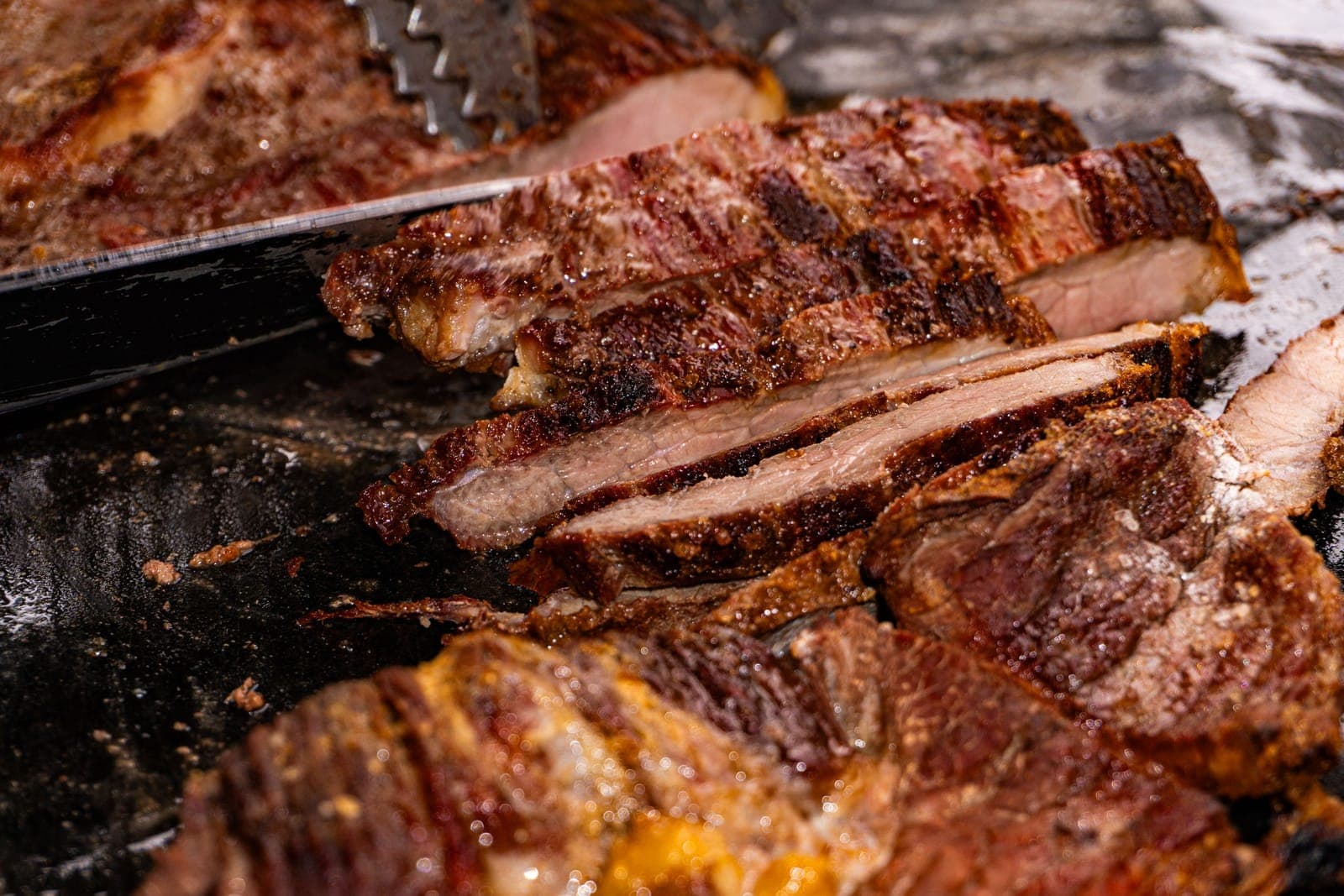
Cut into a steak straight off the pan and the juice runs onto the board in a matter of seconds. Give the same steak five or ten minutes on a warm plate first, and the puddle shrinks dramatically. Same steak, same knife, and all you did was wait. So what changed in those few minutes?
The searing myth, retired
Cooks have repeated the idea of a sealed-in sear for generations. That is the first thing to put down.
Searing meat develops flavor through browning but does not seal in juices.1
So what is that crust actually doing? Something real, just not that, and it comes with one requirement attached.
Browning requires a dry surface, because evaporating water keeps food near 100 degrees Celsius until the surface dries.2
That is why a steak patted bone-dry sears cleaner than a wet one straight from the fridge. The water on the surface has to boil off before the pan can push the meat into browning territory.
What overcooking does that no rest can undo
Resting only recovers juice that is still inside the muscle. Push the internal temperature too high and there is simply less of it left to recover.
Overcooking squeezes water from muscle proteins as they contract, leaving meat dry and tough.3
That is the real cost of a steak left on the heat too long. Once that water is squeezed out, no amount of resting afterward brings it back.
What happens quietly on the plate
Rest is doing its own separate job on the fibers themselves, and it happens quietly while the steak just sits there.
Resting cooked meat lets its muscle fibers relax and reabsorb juices, reducing loss when it is carved.4
Cut too soon and you are slicing through fibers still clenched tight from the heat. Give them a few minutes and they loosen enough to hold onto more of their own juice.
Weigh it yourself
Isolate rest time as the only variable and the difference you see on the board is the fiber relaxation itself. Weighing the juice, rather than eyeballing the puddle, is what turns an impression into a number you can compare test to test.
- Cook two steaks of the same cut and thickness to the same internal temperature, using the same pan and heat.
- Weigh each steak immediately after it comes off the heat, before either one rests.
- Slice the first steak immediately and let the second rest on a warm plate for 10 minutes, loosely tented.
- Slice the second steak only after the rest.
- Blot and weigh the juice pooled on the board for each steak.
- Compare the juice weight between the immediate cut and the rested cut.
- Repeat with a shorter rest, such as 5 minutes, to see how much of the effect shows up early.
- Taste both for perceived juiciness alongside the measured juice loss. That part sticks with you longer than the numbers do.
Sources & facts
- 1. Searing flavors, but doesn't seal ↩
- 2. Dry the surface to brown it ↩
- 3. Overcooking dries meat ↩
- 4. Resting keeps meat juicy ↩
Facts without an external link are drawn from the R&Dish reviewed corpus (textbook-level food science).
TopicMeat & Heat